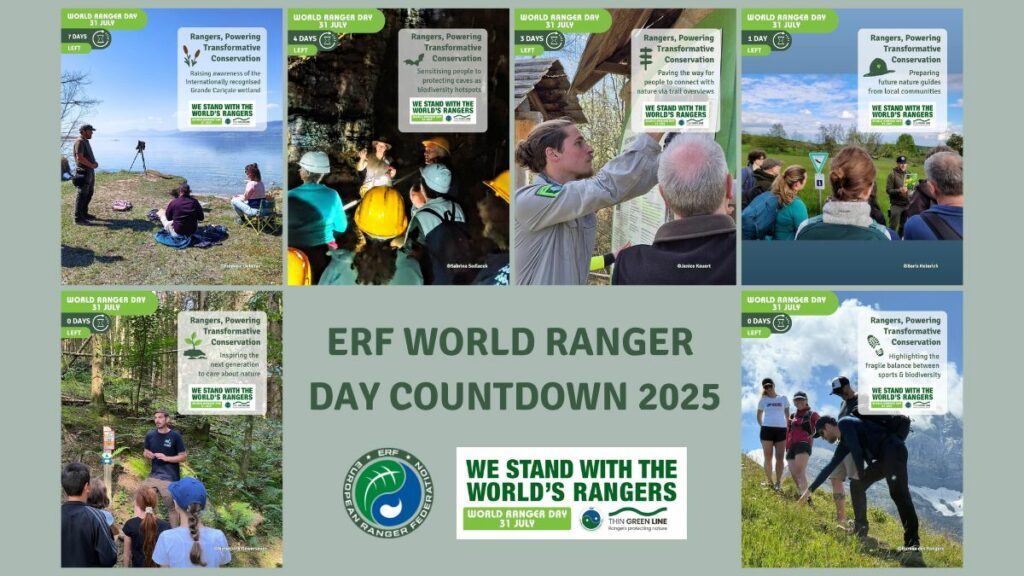
For this year’s World Ranger Day (WRD) theme, ‘Rangers, Powering Transformative Conservation,’ we wanted to see photos from you: how do you power transformative conservation in your ranger work?
Here are the impressive examples sent to us for our World Ranger Countdown 2025 of how rangers connect people with nature and incorporate their needs and knowledge into inclusive nature conservation – an important building block for transformative conservation.
Bureau des Rangers, Switzerland: Highlighting the fragile balance between sports & biodiversity
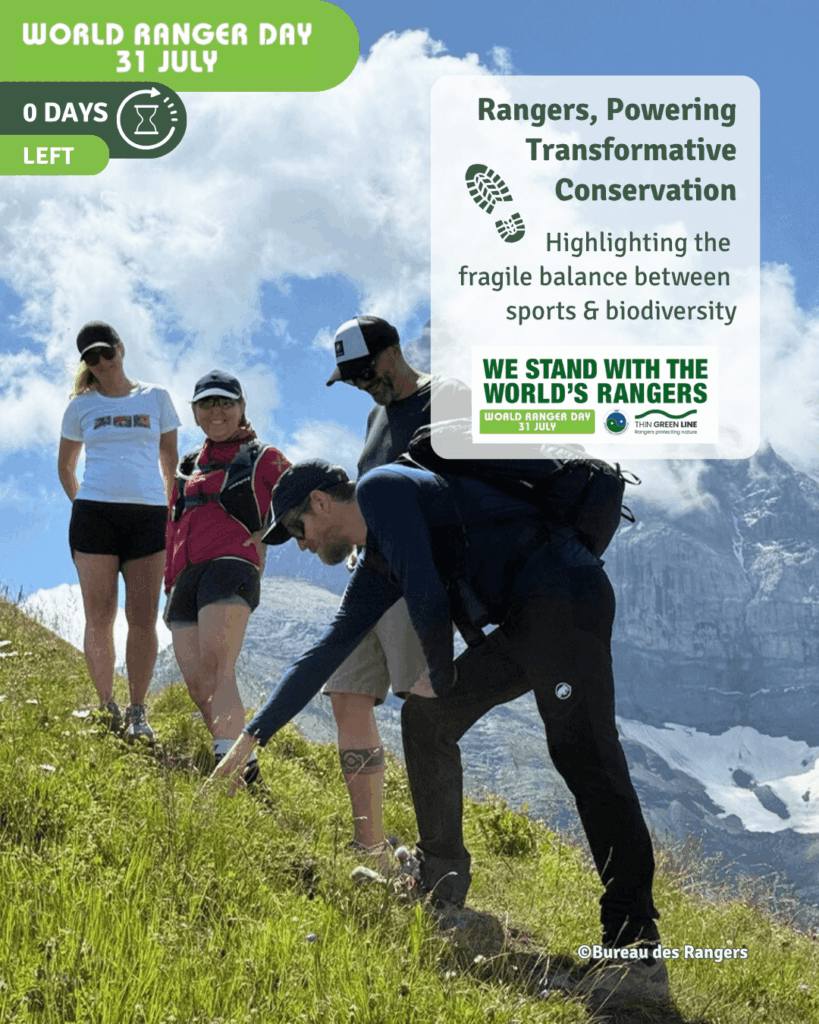
The Ranger Summer Tour, initiated by the association Bureau des Rangers, is an ongoing mountain outreach project that brings a small team of volunteer Rangers into direct contact with hikers along major alpine routes in French-speaking Switzerland. From hut to hut, they raise awareness about the fragile balance between outdoor recreation and biodiversity conservation – especially in the face of climate change, increasing visitor pressure and lack of knowledge about alpine ecosystems. As the association reports, these field interactions often spark lasting changes in behaviour and perception – „For us a living example of transformative conservation through education, presence, and trust“, as president Christian Pflumio writes us.
Tom Schmit, Luxembourg: Inspiring the next generation to care about nature
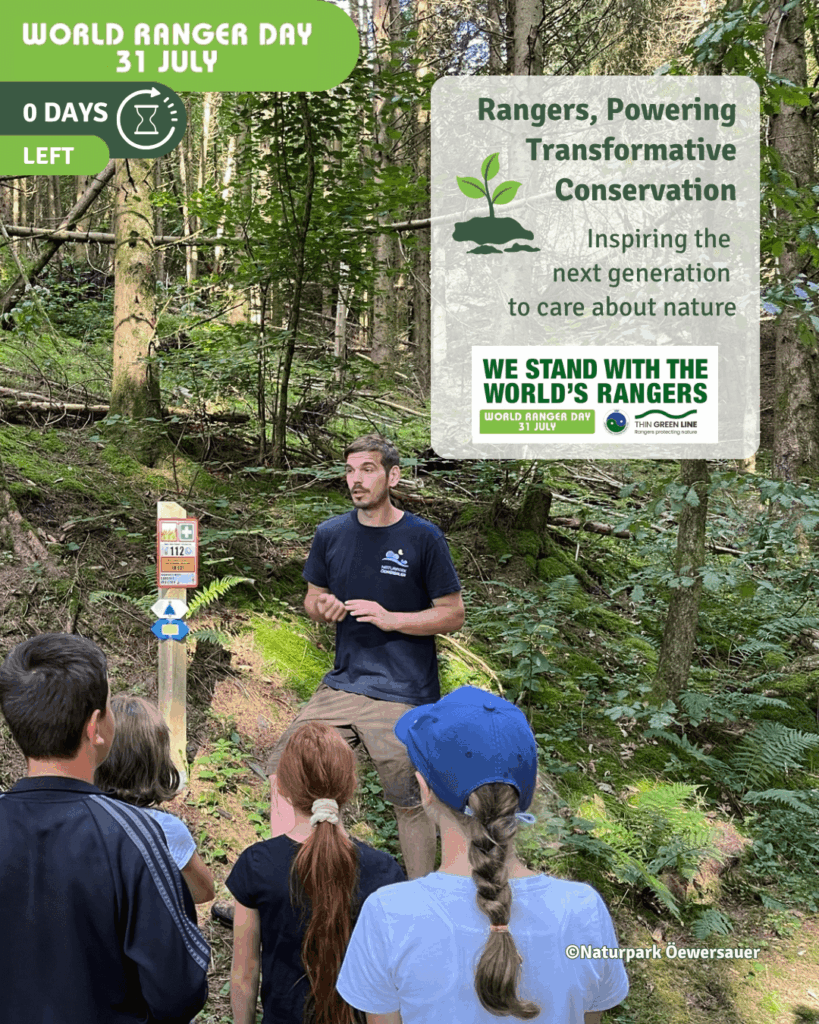
“We plant trees with the communities every year on Tree Day. It is one of my best moments when I see how happy the children are to be working in nature”, says Tom Schmit, ranger in Öewersauer Nature Park. With his dedication to connect the youngs to nature, he lays an important foundation for transformative conservation. By raising awareness of wildlife and nature, as well as resource issues such as drinking water, he teaches children from the surrounding communities about the importance of nature conservation. Who in turn pass on their enthusiasm and new knowledge to their families and friends in their communities. At the same time, they are likely to bring perspectives from their communities to conservation – an important foundation for inclusive and thus transformative conservation.
Boris Heinrich, Germany: Preparing future nature guides from local communities
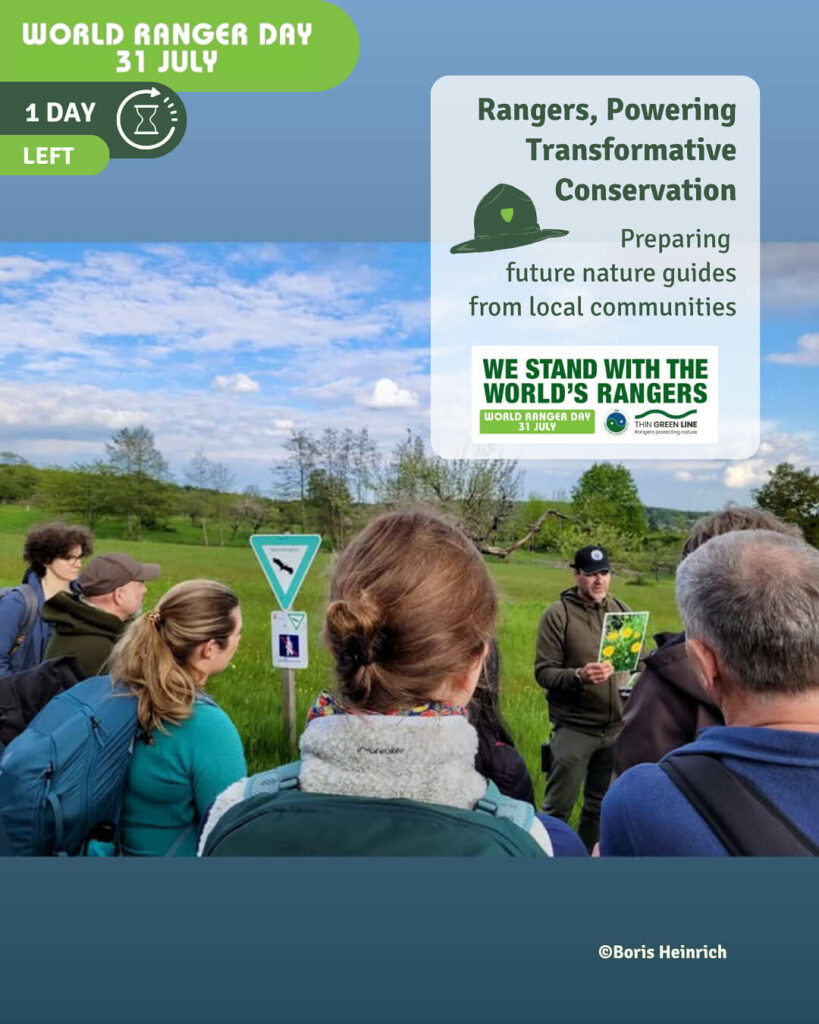
Boris Heinrich, ranger for the Kirdorfer Feld Flora Fauna Habitat area near Bad Homburg, Germany, not only is involved in engaging people in conservation through environmental education, information and awareness. Boris also trains nature guides – as shown here in the photo! In doing so, he powers Transformative Conservation twice: By training additional staff to connect even more people with nature and by involving the volunteers themselves, who usually come from the local communities, making them the perfect link between nature protection and the interests of local communities. A fruitful basis for ensuring that local communities have their knowledge and needs taken into account in conservation.
Janice Kauert, Germany: Paving the way for people to connect with nature via trail overviews
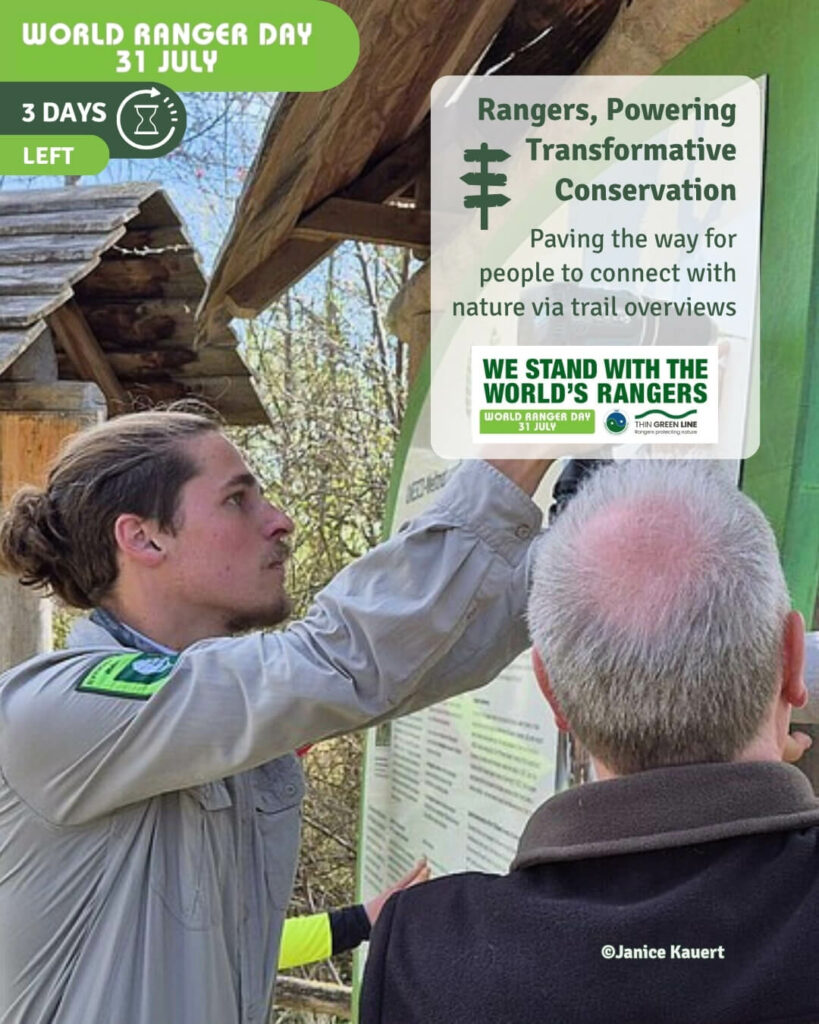
One of the most fundamental ways to involve people in nature conservation is to offer them ways to move around and spend time in protected areas and natural zones. And this, in turn – including people to conservation – is an important prerequisite for Transformative Conservation. Ranger Janice Kauert sent us this photo for our WRD countdown, showing the work of her colleague Jonathan Koops (left) and Rüdiger Biehl, director of the Hainich National Park in Thuringia, Germany. As a result, the national park now has signposts with a new map of cycling and hiking trails.
Sabrina Sedlacek, Germany: Sensitising people to protecting caves as biodiversity hotspots
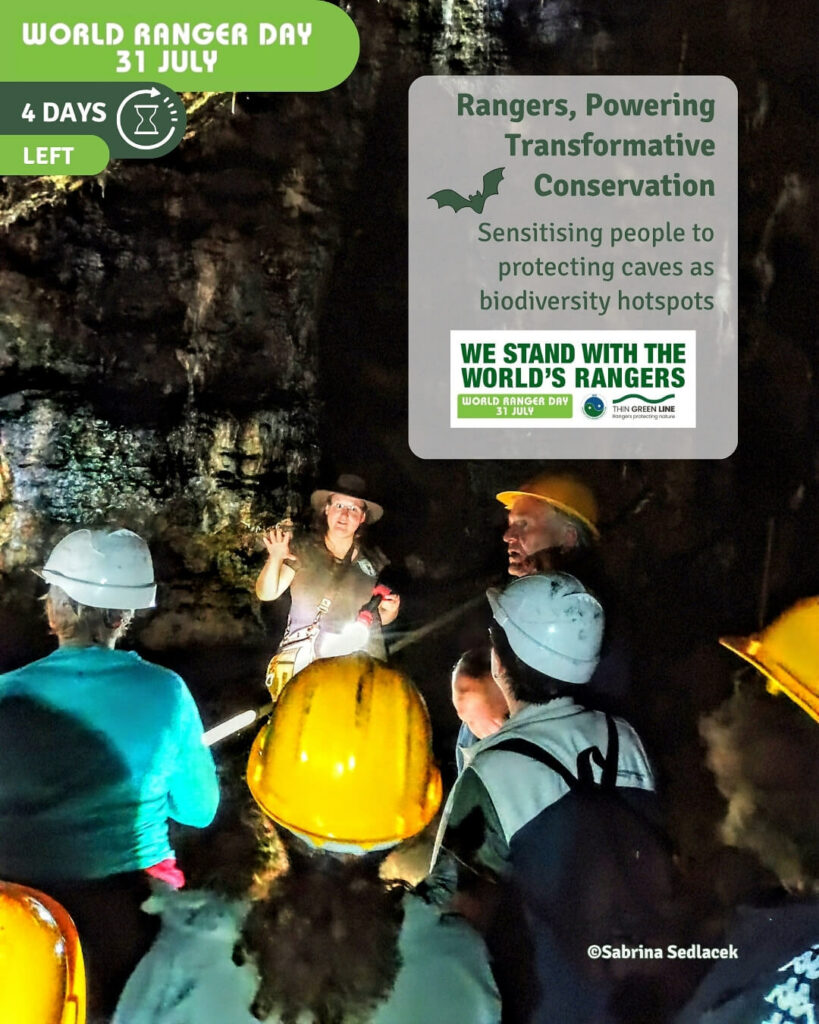
Caves are by no means isolated from the effects of human use of nature: Climate change has a significant impact, as can intensive agriculture, industry and sewage via the groundwater – while caves, on the other hand, are important filters for our groundwater. And then there are human cave visitors, whose litter Sabrina Sedlacek, ranger with Juraranger in Upper Palatinate, Germany, unfortunately finds time and again. She is therefore particularly focused on conveying this highly vulnerable habitat and its inhabitants: in numerous conversations with farmers and via tours to caves as the one pictured, where e. g. the endangered horseshoe bat lives. In her everyday rangering, Sabrina brings people into contact with nature in the spirit of Transformative Conservation: by making them aware of how important caves are for biodiversity and for us, people are included and become willing to help protect this habitat.
Frédéric Debétaz, Switzerland: Raising awareness of Grande Cariçaie wetland
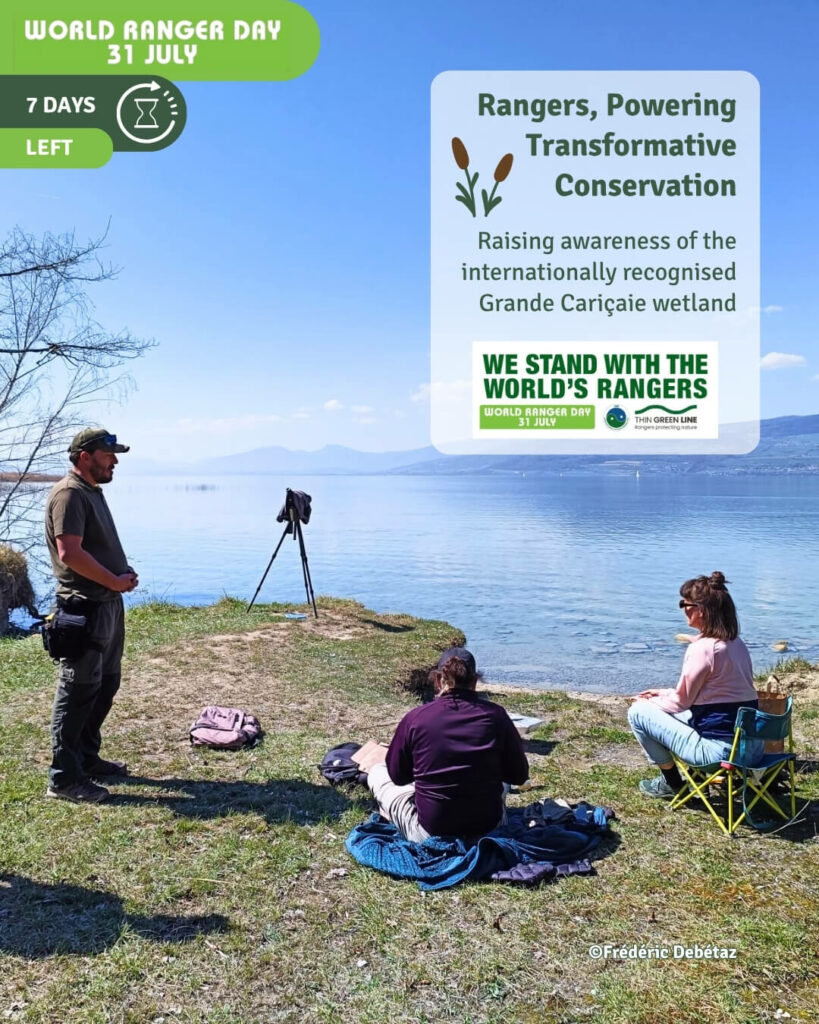
Swiss ranger Frédéric Debétaz (left) from Trient Valley Regional Nature Park is training with colleagues on ways to raise public awareness of the Grande Cariçaie nature reserve – a wetland that is home to a quarter of Switzerland’s animal and plant species, including many endangered ones. The rangers‘ work to raise awareness of nature creates the very connection as a base for what the IUCN refers to as Transformative Conservation: “a process that rethinks relationships between individuals, society, and nature”. Rangers like Frédéric also contribute to the first part of the IUCN’s further definition: “a desired outcome that conserves biodiversity while justly transitioning to net-zero emission economies and securing sustainable resource use”. Because awareness creates inner connections. And thus a willingness to protect biodiversity, including through one’s own contribution to the responsible use of resources.
Transformative Conservation
According to the IUCN, transformative conservation is both a process that rethinks relationships between individuals, society, and nature, and a desired outcome that conserves biodiversity while justly transitioning to net-zero emission economies and securing sustainable resource use.
As our WRD-Countdown shows, ranger work deals with relationships between individuals, society and nature on a daily basis, always in connection with the protection of biodiversity and thus natural climate protection. Often it also changes people’s mindsets, with a new connection to nature leading to a more conscious use of natural resources.
editorial work for this
content is supported by