
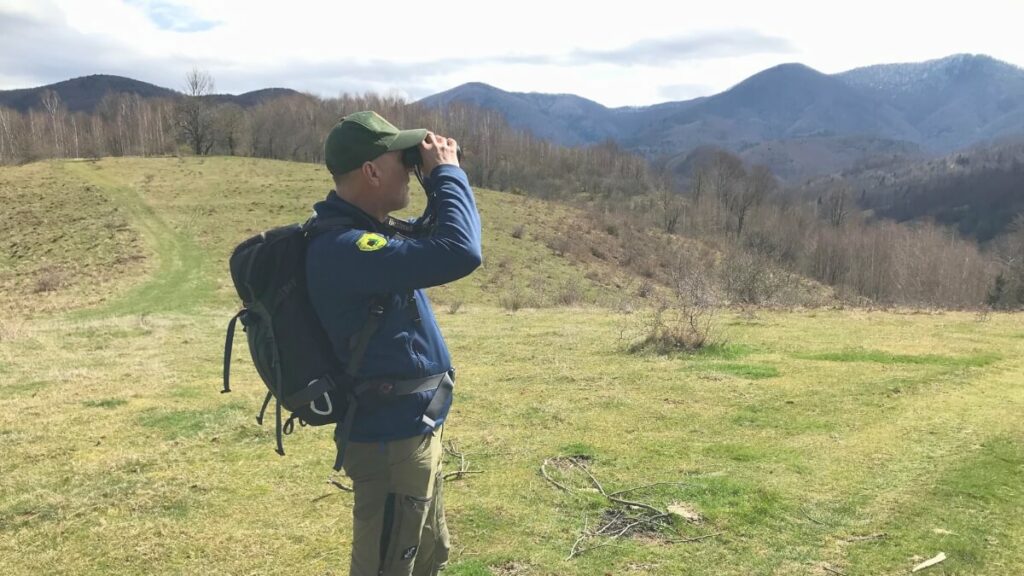
He has been well connected and highly committed to the international ranger community for decades. Since the recent European Ranger Congress, Florin Halastauan from Romania is our new president. In this interview, he explains why it is so important for ERF to integrate national ranger associations more closely.
We are delighted to have his in-depth expertise on board, both as one of Romania’s first rangers and as an active member of the European ranger family. Read what goals and visions he brings to the European rangers and the work of the ERF.
Florin, please tell us about the challenges you would like to tackle as ERF President.
Definitely the involvement of national ranger associations in the ERF: we need to develop our own activities and strategies for the coming years in line with the specific needs on the ground in our member regions. If European ranger associations don’t engage more with ERF, we do not know what is happening with the ranger profession in each member country: how many rangers are employed, how many are volunteers, what is their vocational training like, what are the pressing issues where rangers lack support from their employers?
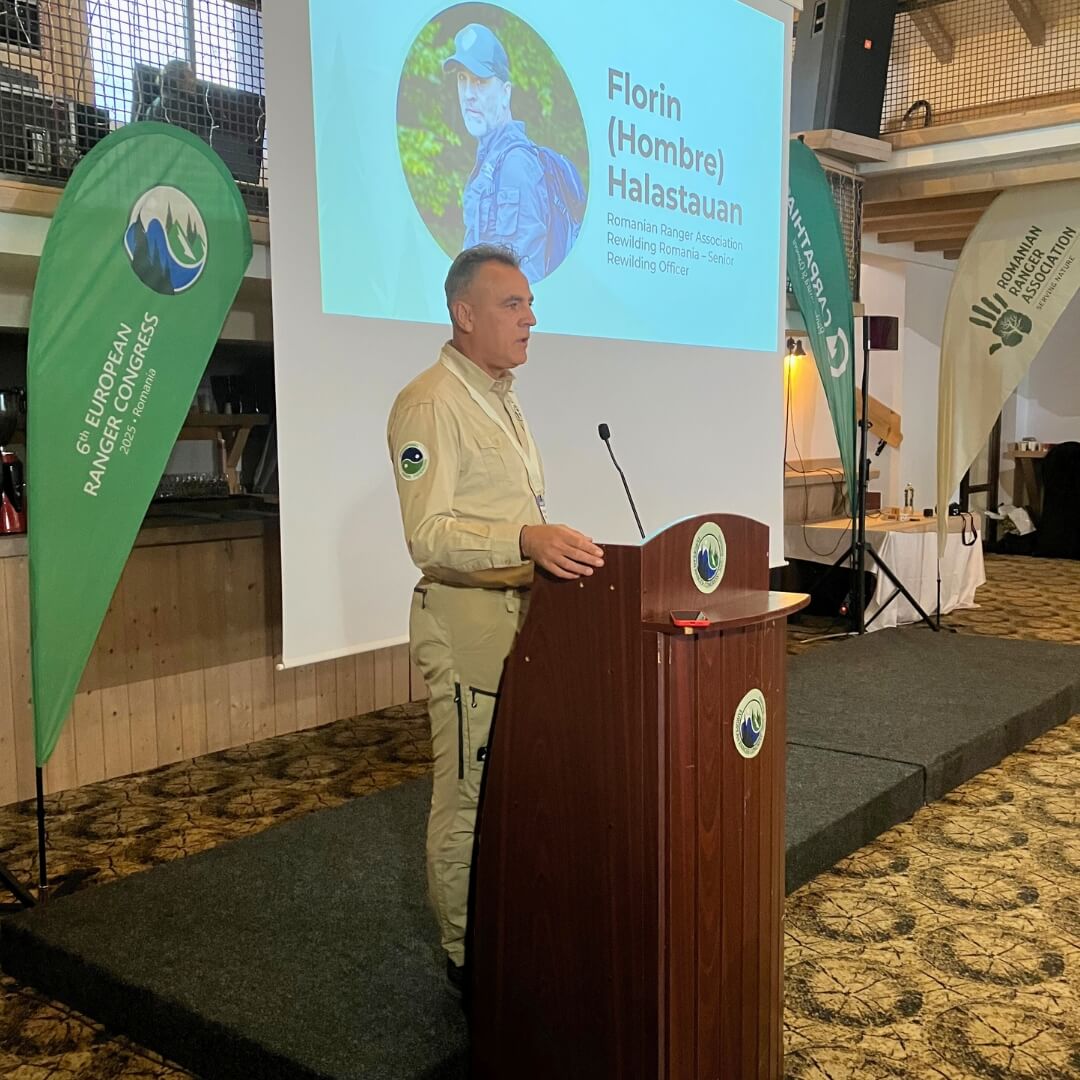
“We need the complete picture on the status of the ranger profession on the ground – to develop targeted support for the respective countries and to advocate at European level.”
Florin Halastauan, ERF President
We need the complete picture on the status on the ground. This is not only important for developing targeted support to meet the needs of rangers in their respective countries. This information is also crucial for advocating for rangers at European level. We need statistics to demonstrate the importance of the ranger profession, but also to lobby for the support it requires – whether in terms of personnel, training or equipment. This will be the core task of my term as ERF President for the next three years.
What does this mean for the way the ERF works?
We will make greater efforts to establish direct contact with national ranger associations and their representatives, particularly in regions where international exchange is not yet well established. We already have good exchanges and mutual training on topics such as junior rangers and nature interpretation between a few countries.
But we need this for our entire region in order to address the specific challenges in each country and to establish and strengthen contacts within the European ranger network. That is why we want to be present at the local meetings of the national ranger associations, help them to be more active in their own areas, and identify training needs for which we could jointly raise funds.
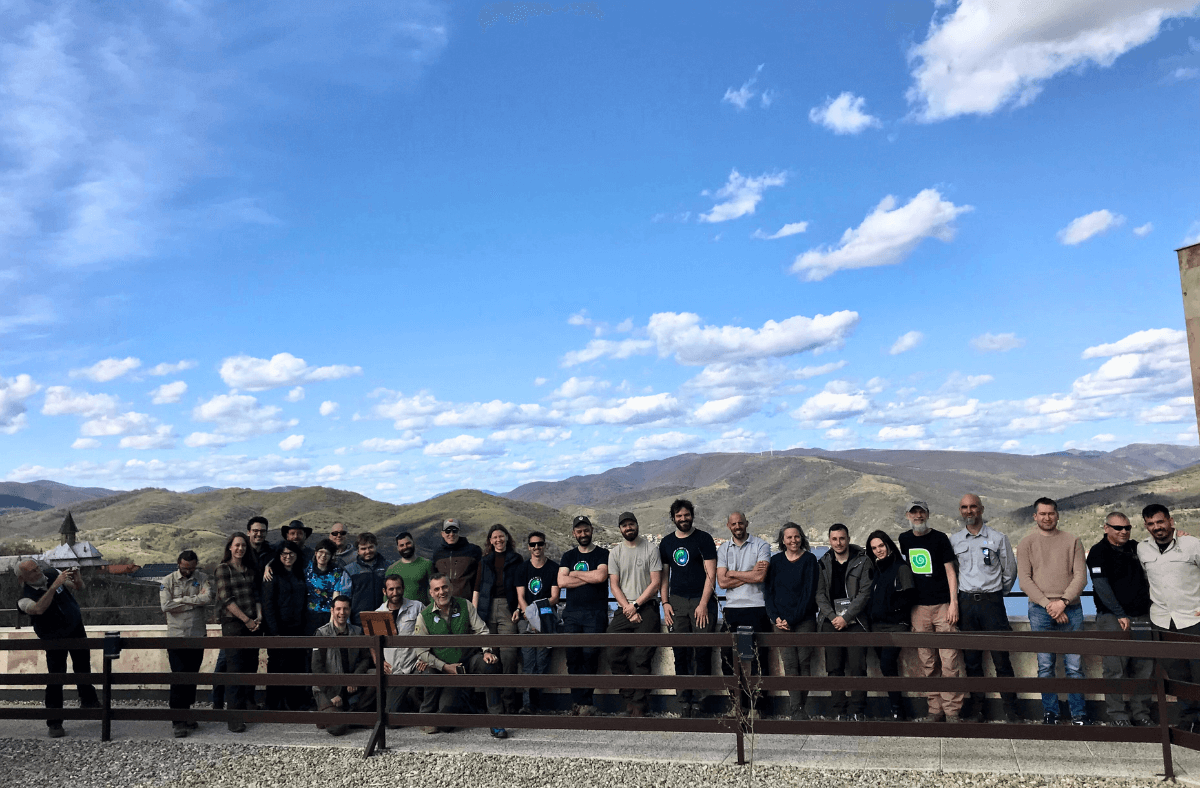
Ultimately, it is also about fulfilling the purpose for which the ERF was founded: to represent and support rangers in the field. To do this, we must remain in contact with the national associations as our roots.
How feasible is this, given the challenging ranger profession and the volunteer work required as national ranger presidents or ERF representatives?
I know myself how demanding it can be to invest additional time in such voluntary work on top of your job, family and other commitments. But those who stand as representatives of the national ranger associations should be aware that this involves putting in a few extra hours for the benefit of all ranger colleagues in Europe. This is also the case for us on the ERF board. Even though we will try to raise funds for further paid work on important responsibilities – for example, to be more present for our members on the ground.
Where should the ranger profession stand in Europe in the future?
Above all: in public awareness. By participating in national ranger meetings, we also want to raise an understanding of how important it is to involve local decision-makers in these gatherings. In this way, our members can strengthen awareness and support for rangers in their respective countries, their numbers, the importance of their work and the challenges they face. Now, as the Romanian Ranger Association, we plan to approach the Ministry of the Environment and the Forestry Department, as the largest employer, to improve the working conditions of rangers at the local level.
“In future, the ranger profession must be one that decision-makers understand is fundamental to environmental goals. After all, it is the rangers who put these goals into practice in the field.”
The same must also be done by us as the ERF at European level – whether through contact with EU politicians or by participating in important international conferences on nature conservation throughout Europe – in order to make stakeholders aware of how important it is to involve our profession in all decisions on conservation. In future, therefore, the ranger profession must be one that decision-makers across Europe understand is fundamental to their environmental goals. After all, it is the rangers who put these goals into practice out in the field.
What is your vision for the work of ERF?
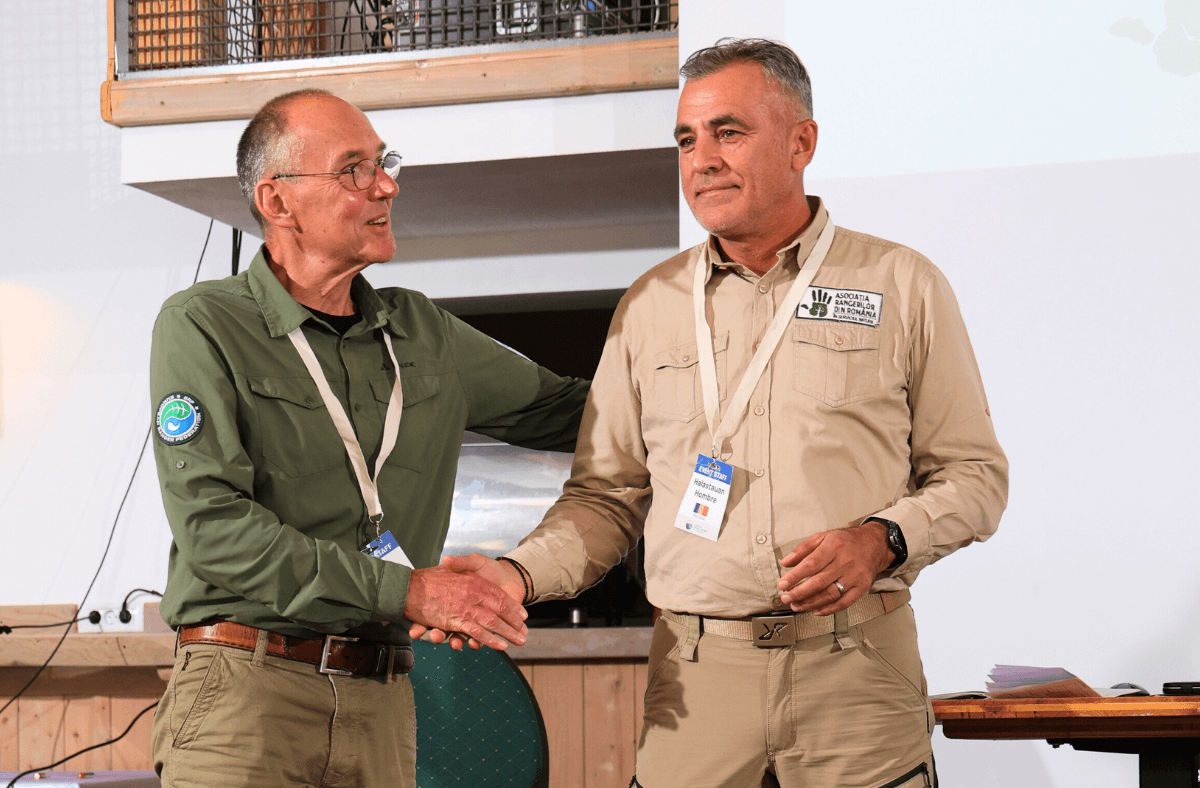
For us as the ERF, it will be crucial to involve all levels, from the national grassroots to the European level. That is the task and vision I have for my position as ERF President, to help meet the needs of rangers in every country and make the ranger job visible up to the top level. This is all the more important in view of the many new challenges rangers face as a result of advancing climate change, such as fighting forest fires. Rangers need to develop new skills to meet such challenges. So we need to talk about the future of our profession, not only among ourselves, but also with decision-makers.
We discussed all of this – our vision and our goals – in autumn 2023 in Dartmoor National Park (UK) together with many ranger colleagues from across Europe. It was very important to hear everyone’s views and discuss with them. This very helpful ERF workshop was also sponsored by the Environmental Foundation Greenpeace. Now we at ERF must continue to drive forward our professionalisation and, in addition to the excellent support from our partners to date, apply for funding at European level together with strong partners.
editorial work for this
content is supported by
One thought on “New ERF President: We must stay connected to national ranger associations as our roots”
Comments are closed.