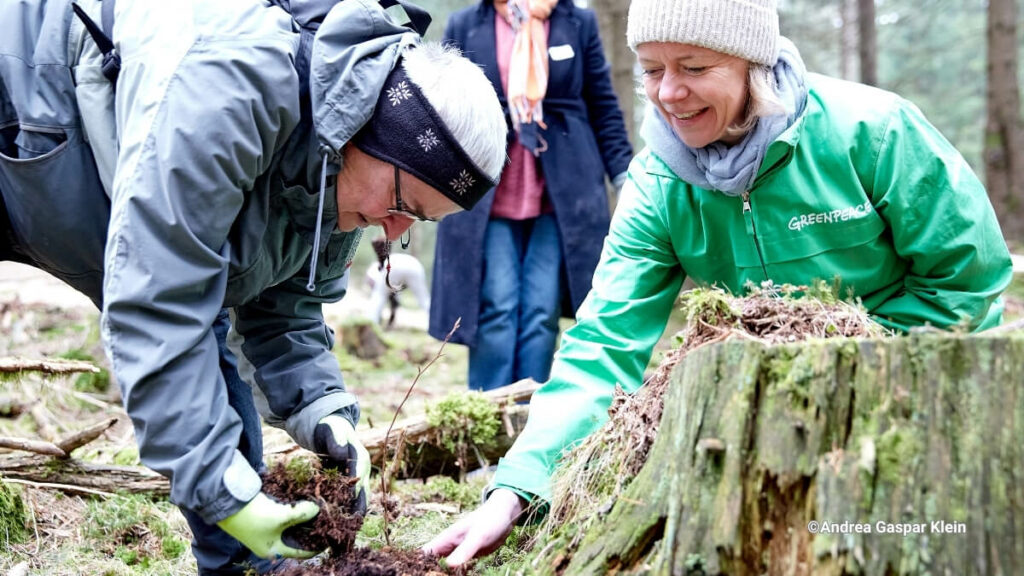
Without the continuous and generous support of the Greenpeace Environmental Foundation, we couldn’t have done much of our work for rangers in Europe and beyond in recent years. The foundation just turned 25: High time to show you who’s behind our major partner. What has the foundation achieved in its mission to secure healthy ecosystems for the future?
Managing Director Sandra Güntner reports here on an impressive portfolio of solution- and community-oriented projects. We are proud to be part, and to continue working on our shared mission: preserving the natural foundations of life for humans, animals, and plants!
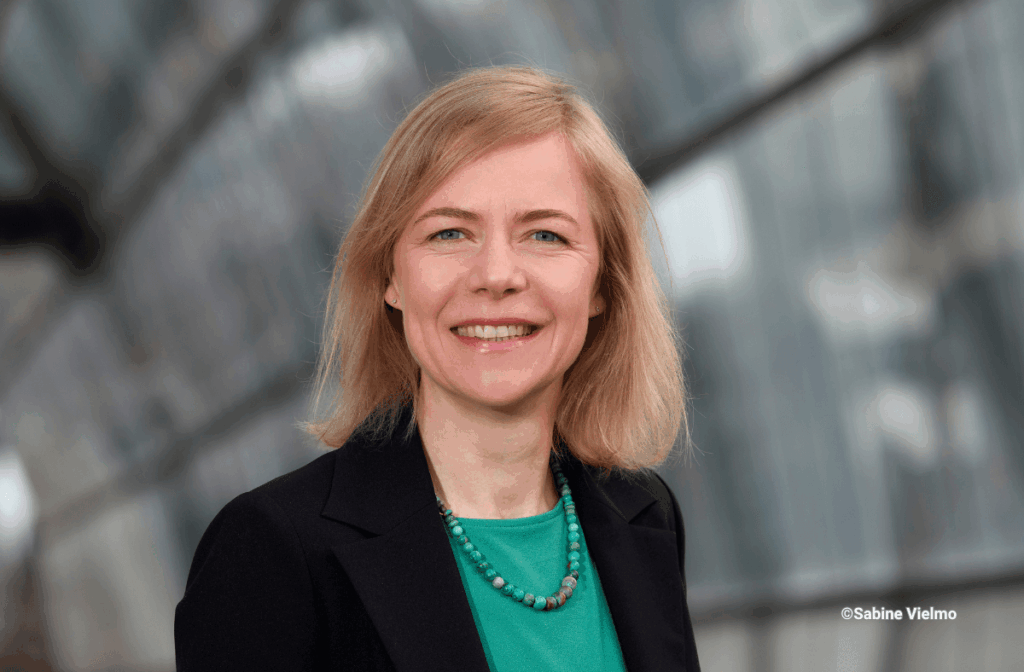
Dear Sandra, the Greenpeace Environmental Foundation has been funding projects that preserve our natural resources and protect our livelihoods for 25 years now. How did it all start, and why was the foundation established?
SG: Greenpeace Germany has been active since 1981, exposing and tackling environmental destruction with spectacular and creative campaigns and actions. In 1999, our foundation was established to create additional impactful opportunities for engagement. As a foundation, we are built for perpetuity. Many environmental projects take a lot of passion and perseverance. However, non-profit organisations such as Greenpeace in Germany are legally mandated to spend all donations within two years.
The foundation is supported by more than 1,400 donors and has funded nearly 150 projects over the past 25 years, providing impactful opportunities for engagement.
This is one of the reasons the organisation decided to establish a separate foundation. The foundation’s endowment capital is never spent; we only work with the returns of its investment. This creates a sustainable framework for long-term initiatives. We focus on concrete, solution-oriented projects that complement the campaign work of Greenpeace Germany. Many Greenpeace supporters are also involved with us and help to increase our foundation capital through their endowment gifts. Today, the foundation is supported by more than 1,400 donors and has funded nearly 150 projects over the past 25 years.
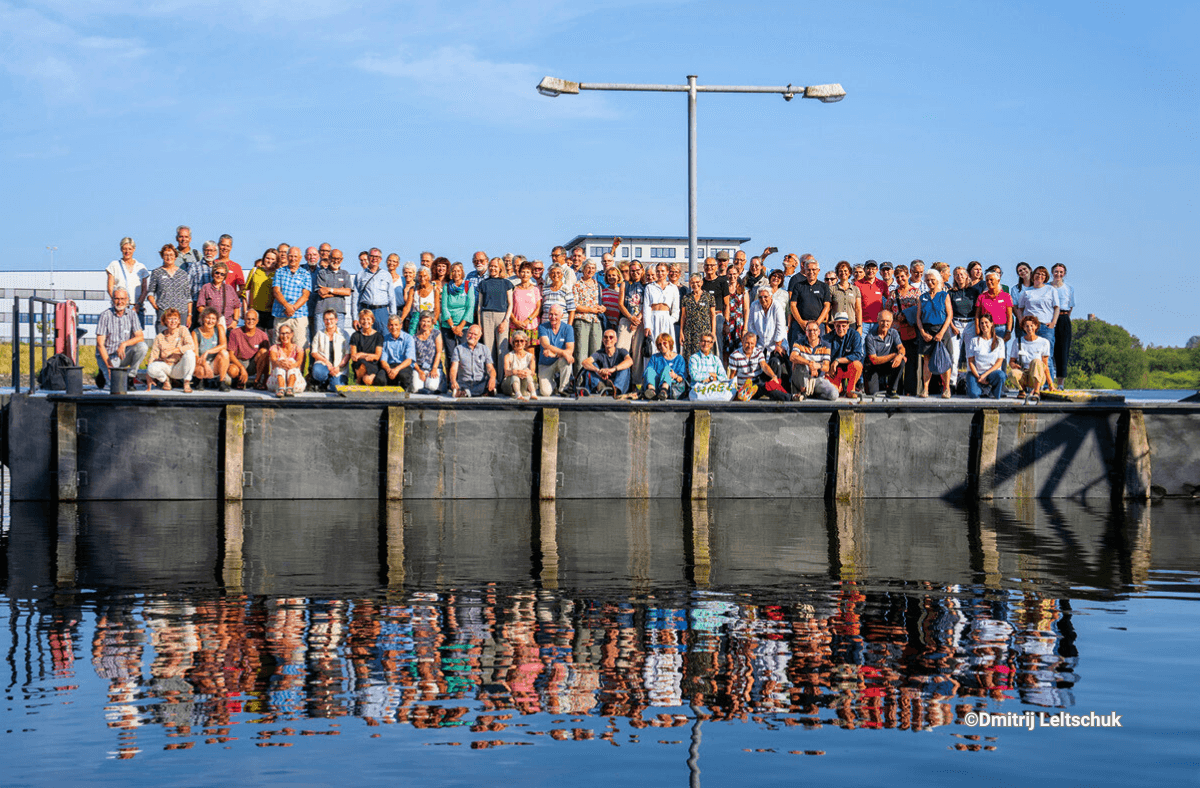
What has been the foundation’s development since 1999?
SG: The foundation awarded its first grant to a research project at the University of Kassel, Germany, in 2000, supporting the purchase of a cow from an old, endangered livestock breed. The aim was to explore models for ecologically oriented agriculture and livestock farming. As the foundation has grown, so have our programmes—both in scope and geographical reach. Today, we are active in biodiversity, marine conservation, forest and biotope protection, peace work, climate action, and environmental technology across Africa, the Americas, Europe, and globally. A project particularly close to our hearts is our donors’ grove in the Black Forest, Southern Germany: for every new donor, we plant a fruit tree, primarily of traditional and local varieties. Over the years, this initiative has created a unique and diverse orchard biotope.
Commitment to sustainable forest management aligns with the foundation’s mission: long-term orientation and securing healthy ecosystems for decades to come.
In 2020, we joined forces with our project partner Bergwaldprojekt to acquire forest land in Thuringia, Germany, thereby laying the foundation for a new flagship initiative: the “Future Forest Unterschoenau.” On the 280-hectare site, we aim to demonstrate how intensively managed spruce forests can be restored to species-rich mixed forests and sustainably managed. Through this practical example, we hope to provide guidance to other forest owners and inspire them to follow suit. At the same time, we have been supporting the innovative degree programme “Socioecological Forest Management” at the University of Applied Sciences in Eberswalde, addressing the ongoing shortage of skilled professionals needed for the forest transition. Students gain valuable practical experience during excursions in our “Future Forest”. Our commitment to sustainable forest management aligns perfectly with the foundation’s mission: it is long-term oriented and allows us to help secure healthy ecosystems for decades to come. Looking back, we can be proud of a successful history, while also looking ahead with ambitious plans.
Speaking of the future, what are the foundation’s priorities and aspirations for the years to come?
SG: Following years of successful growth, the Greenpeace Environmental Foundation is now able to allocate more funds to meaningful projects. Our extensive experience, strong partnerships, and vibrant network are opening new opportunities for greater impact. Against this backdrop—and at a time when ecological and social challenges are becoming increasingly urgent—we aim to fully harness the foundation’s potential to support projects in the most effective way.
Helping to shape change by sharing expertise and leveraging an extensive network
Rather than considering individual projects, we are focusing on systemic change and interconnections, thereby contributing to a liveable and secure future on this planet. It is important to us not only to provide funding, but also to actively help shape change, for example, by sharing our expertise and leveraging our extensive network. Our endowment, invested according to ecological, social, and ethical criteria, also contributes directly to these goals and reflects the principles that guide the foundation—in line with the Greenpeace mission.
The foundation is supported by more than 1,400 donors. How do they contribute to your work, and what opportunities do they have to get involved?
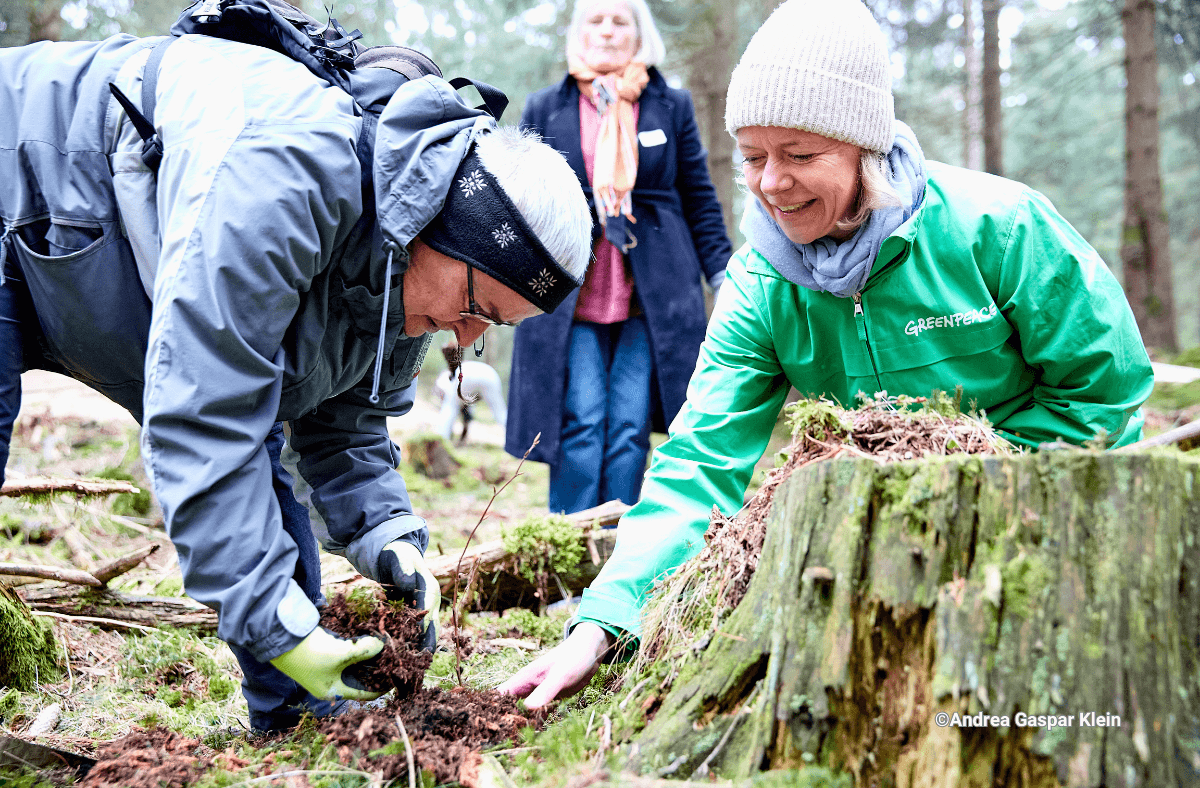
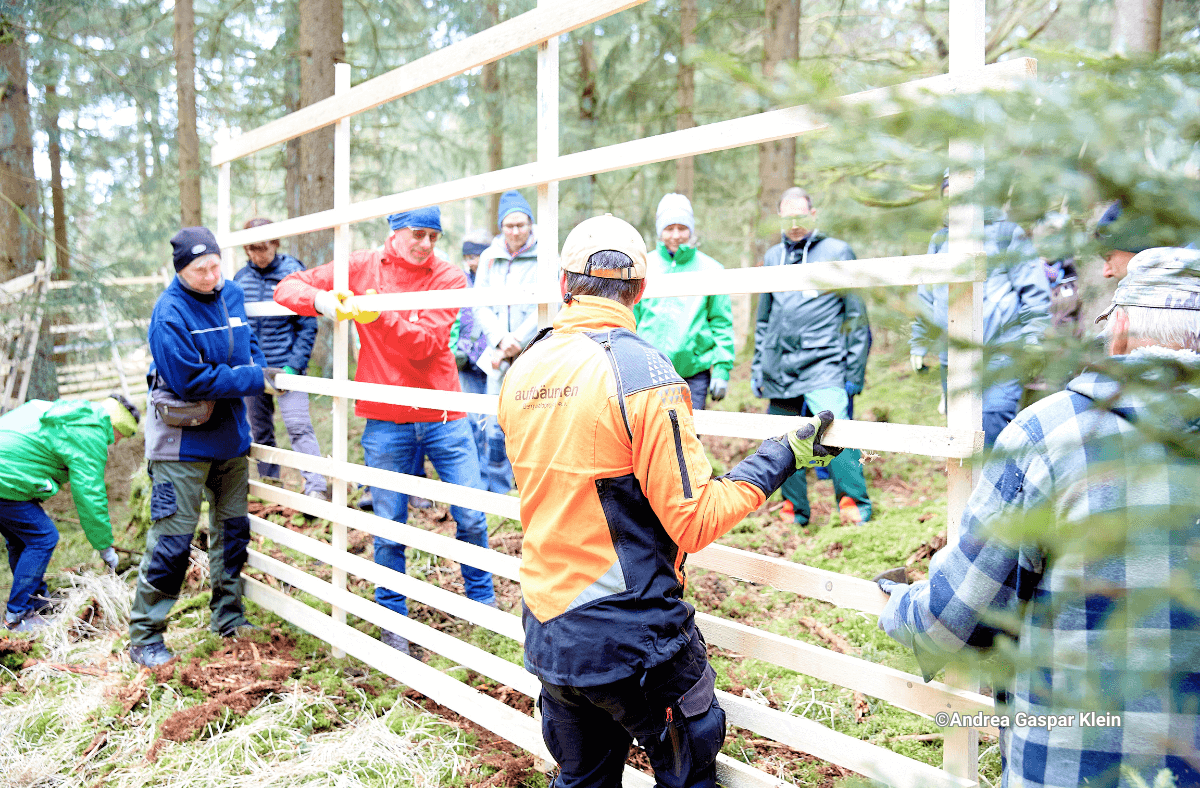
SG: The motto of our 25th anniversary was “shared growth, shared impact”—and that is exactly what we have experienced with our donors. This year, we invited them to an excursion and a hands-on day in our “Future Forest”. Many new connections were made, and together we planted young trees and built wooden protective fences to prevent wildlife browsing. This project is only possible thanks to our donors, and it also gives them the opportunity to experience the forest firsthand. Most of them are already looking forward to coming back this year!
Many people are reflecting on how they can contribute to a peaceful, green, and just future. We bring these individuals together and provide a range of ways to get involved.
In today’s world, many people are reflecting on how they can use their resources to contribute to a peaceful, green, and just future. Within our foundation’s community, we bring these individuals together and provide a range of ways to get involved—from permanent endowment gifts to terminable loans. Donors who contribute at least €2,500 to our endowment fund can choose whether their support goes to forests, oceans, biodiversity, climate protection, or peace work.
This year, we also introduced two virtual foundation cafés, which were warmly received. At these events, our project partners shared firsthand insights from their work and engaged directly with donors, fostering meaningful connections. It is moments like these that showcase the energy and commitment of our community in action.
Why did you decide to support us, and by extension, the rangers across our continent? How do you see our goals aligning? What would you like to see from us in the future?
SG: We have seen the enormous long-term potential of the European Ranger Federation: since your foundation in 2017, you have brought together so many experts, fostering a wealth of experience and knowledge that is applied across national borders, enabling rangers to act as multipliers for environmental protection and education. This idea directly supports our mission of raising awareness about global environmental challenges and preserving the natural foundations of life for humans, animals, and plants.
Looking ahead, we are please to support the ERF’s “Female Rangers” training programme and can envision a connection between your forest rangers and our forest projects.
According to the United Nations, 30 percent of land and marine areas should become protected over the next five years, and rangers play a crucial role in achieving this. As ERF board member Maria Gurscaia told us, around 1.5 million new rangers will be needed, which also requires strengthening the position of women in the profession. We are therefore particularly pleased to support your planned “Female Rangers” training programme. Looking ahead, we can also envision a connection between your forest rangers and our forest projects, with many opportunities to further develop our fruitful collaboration. We wish your organisation continued success in your development and look forward to continuing our partnership.
Just like us, in fact! Thank you very much for the interview and the trusting cooperation.
editorial work for this
content is supported by