It was a tragic incident that led to the death of a tourist in Romania and, as a result, of a bear that left behind three cubs. An incident that could have been avoided. We spoke with wildlife biologist and ranger Liviu Moscaliuc about the background to a case that occurred on the Transfăgărășan road in the Carpathians, a popular destination for tourists such as the now deceased motorcyclist from Italy.
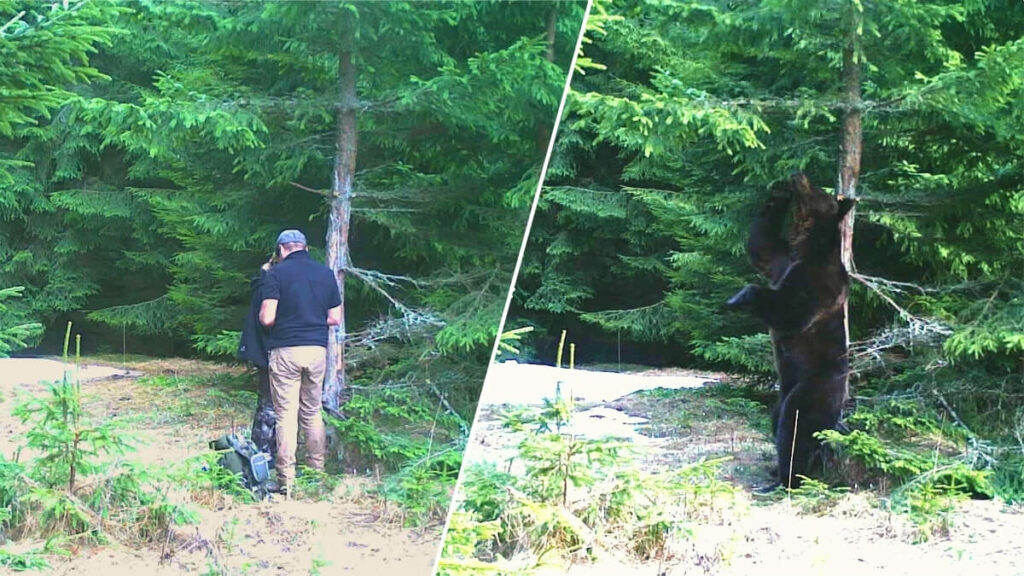
Cover photo: Wildlife biologist Liviu Moscaliuc and colleague installing a camera trap; on the right a young bear rubbing itself against the same tree – credits for all photos on this page: Liviu Moscaliuc
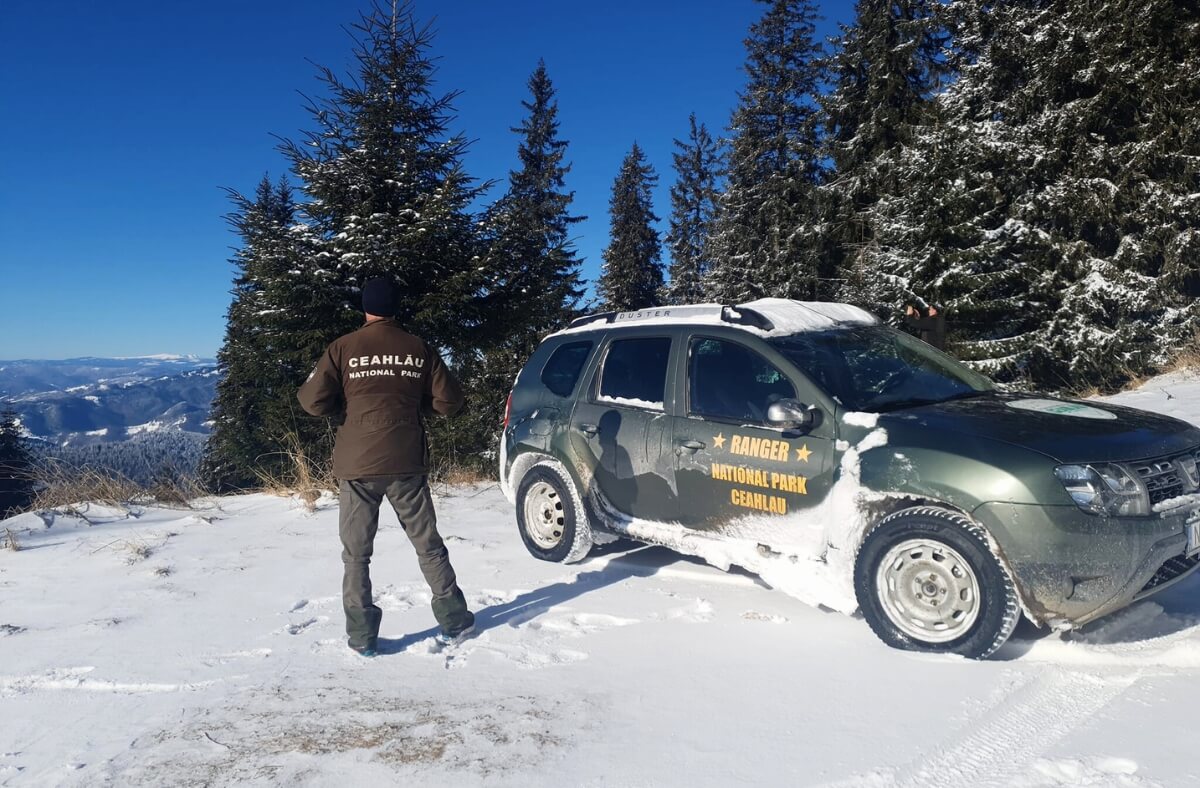
As a wildlife biologist in Ceahlău National Park in north-eastern Romania, Liviu’s daily tasks include observing bears to analyse their movements and behaviour. Read here how the expert sees the responsibility for preventing such tragedies solely with us humans, why feeding bears is always a very bad idea, and how important rangers are in raising awareness by appealing to visitors on an emotional level.
From your perspective, what happened that led to the death of the Italian motorcyclist and ultimately to the death of the bear that attacked the tourist?
First of all, I am truly sorry for what happened to this man. It is very difficult to talk about such a topic because it is very emotional. Unfortunately, there are bears in this area. Since bears are very opportunistic and gather wherever there is a source of food, many of them linger along this road.
As bears repeatedly have been fed by tourists and police presence to enforce the feeding ban is insufficient, bears concentrate along the Transfăgărășan road.
This is because they are repeatedly fed by tourists and sometimes even by locals to lure bears as a tourist attraction. As a result, the bears concentrate in this location – unlike many other places. So the real problem is the tourists who feed the bears and the lack of sufficient controls and police presence to deter them. The police are on site and there are warning signs, but this is still not enough, as it is very difficult for people to understand the danger. With an estimated 2,000 tourists a day on a road like the Transfăgărășan and only around four police officers available, it is all the more difficult to enforce the feeding ban.
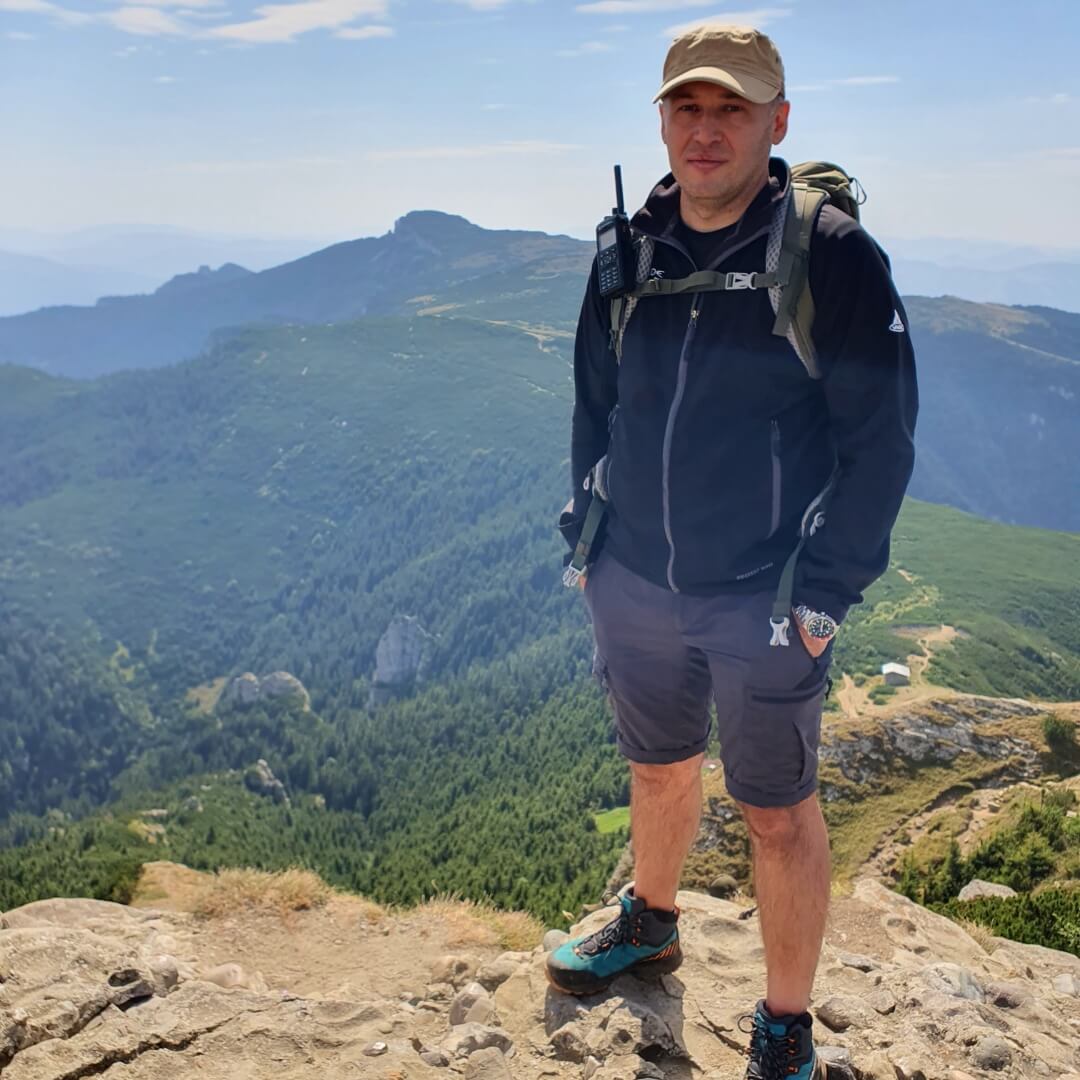
Feeding bears is a particularly bad idea near heavily frequented areas, as they gather wherever there is a source of food. It is very likely that bears will react like on the Transfăgărășan road if the distance to humans gets too small.
Liviu Moscaliuc, Wildlife Biologist in Ceahlău National Park
Why is it a bad idea to feed large predators – and does this apply to all wild animals?
The problem lies mainly with the bears, as they quickly learn where the food comes from and keep returning to these places. It is very dangerous to feed them, because bears are very strong and can cause damage. It is a particularly bad idea near populated and heavily frequented areas, as bears learn to come there. It is very likely that bears will behave like the one on the Transfăgărășan if the distance to humans is too small – even more so if, as in this case, the bear has cubs. However, for other animals and under controlled conditions, feeding wild animals can be a management measure. For example, vultures are fed carcasses because they are threatened with extinction and cannot find enough food sources in nature.
Rangers work daily in the relevant regions to prevent people from feeding large predators. How could rangers prevent such incidents even more effectively?
In Romania, rangers can educate and guide people, but to enforce a rule, you have to work with the police. However, rangers are extremely important in raising awareness about the dangerous effects of feeding bears. So it would be good to have more rangers. But to enforce the rules, you really need the police. Nevertheless, rangers are already doing important work in regulating human-wildlife interaction. They can explain to people how to behave in order to ensure coexistence, they can track wild animals and tell people where they need to be careful.
Rangers are an important interface between the public and wild areas. By engaging people emotionally, the message is understood even better and internalised on a very personal level.
So rangers are really important as an interface between the public and wild areas. But of course, it is always useful for rangers to learn how to better engage visitors emotionally. It is not enough to simply provide information about where bears can be found and why visitors should not approach them. It is important to engage people emotionally, for example through techniques of Nature Interpretation, and tell a story so that the message is understood and internalised on a very personal level.
Speaking of emotions: the bear that attacked the tourist and was shot left behind three cubs. What happened to them?
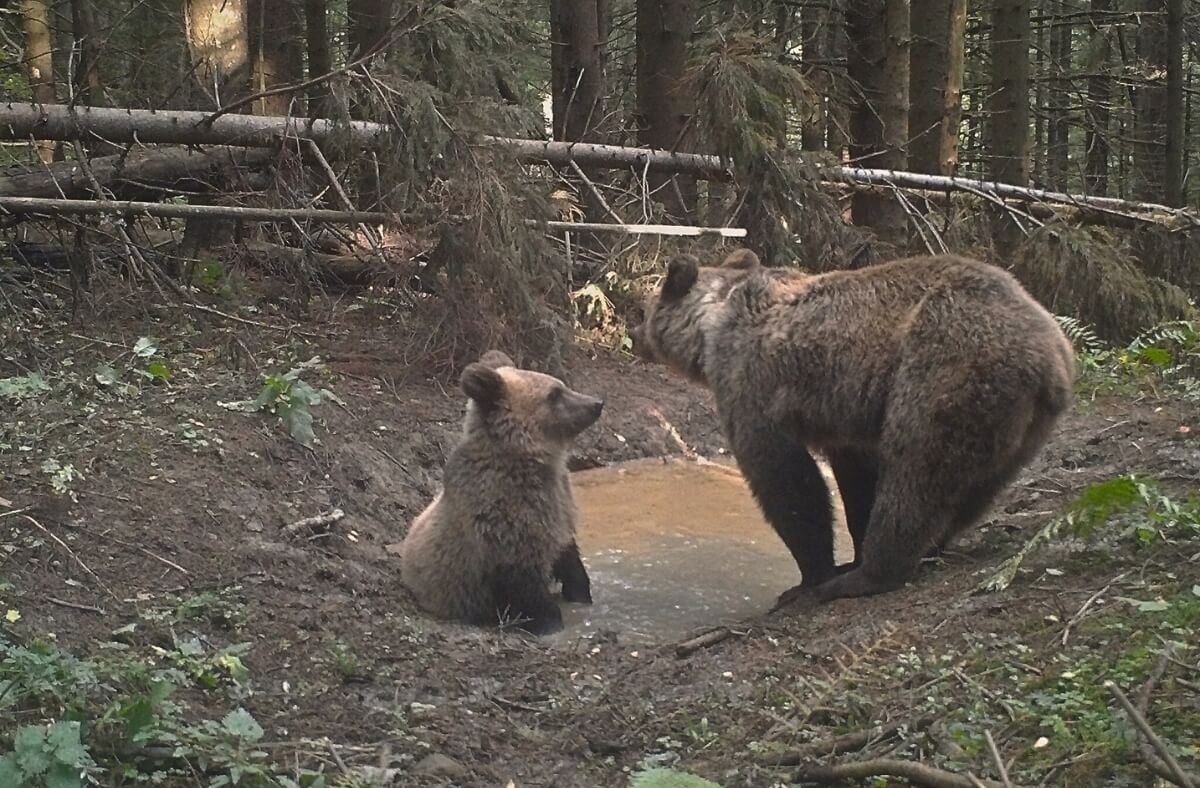
The three little bears were left alone and traumatised. One of them was taken to a bear sanctuary. The other two disappeared, if I am informed correctly. In the sanctuary, bears are simply kept there for the rest of their lives – unlike in a bear rehabilitation centre, where the aim is to release the bear back into the wild. The consequences of feeding bears are therefore quite tragic for these three cubs as well.
After the incident, headlines about the bear as a ‘killer bear’ multiplied. Why are the reactions so inaccurate and sensationalist?
The media often sensationalise stories because it sells well. But reports should be more balanced. It is a tragic incident, but in general, people are to blame: problems arise and people get hurt when they get too close to bears, feed them or take photos at close range. The bears here do not kill for the sake of killing. They react because they feel cornered or see their young threatened. Due to their strength, this reaction can cost people their lives. So there are victims of tourists’ lack of caution and ignorance, and of insufficient personnel such as police officers or rangers to keep people away from bears and sensitise them to the dangerous consequences. But it is up to us to prevent such tragic incidents.
According to the Ministry of the Environment, 30 people have been killed by bear attacks in Romania over the past two decades. Doesn’t this sound like a lot?
We talk a lot about these tragic events. However, when you compare this figure with the 244 people who died in car accidents in Romania in the first three months of this year alone, it becomes clear that there are real and greater dangers than bear attacks. But no one is getting emotional about it, even though people should really be demanding better traffic management. This shows how emotional the issue of bears is, even though people should in fact be rational in order to manage the risks of attacks. They can and should be managed in a way that prevents encounters like on the Transfăgărășan.
How do you assess the warnings about an ‘overpopulation’ of bears in Romania and the calls to shoot them, which are also being spread across the media?
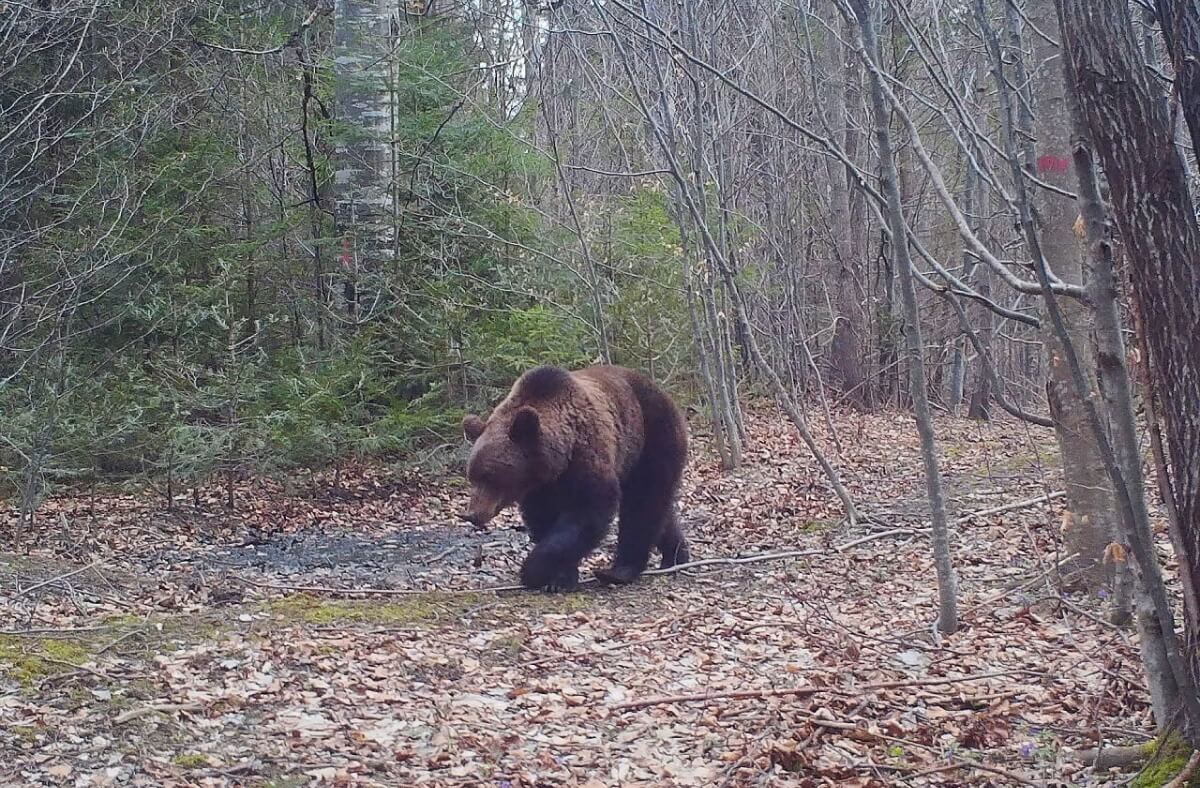
As a wildlife biologist, I am monitoring wildlife in our national park. My responsibilities include setting up camera traps to track the populations of bears, wolves, and lynxes. I have even visited bear dens on numerous occasions to determine which bears have used them and whether they were used in the previous year. But despite all this, and even though we regularly see them on camera footage, I have never seen a bear live in Ceahlău to this day. So unless you lure bears with food, the chances of seeing them are very low. A perfect example of this, by the way, are the neighbouring valleys of the Transfăgărășan road: It is much more difficult to see bears in these areas, as they are widely dispersed and only concentrate near the road, where they can take advantage of easily available food sources.
Even though we regularly see them on camera footage, I have never seen a bear live in Ceahlău to this day. So unless you lure bears with food, the chances of seeing them are very low.
That said, discussions about the ‘right number of bears’ nature can support are really misleading. If there is a certain number of bears, it means that this number can find enough food to grow and exist. There are as many bears as the ecosystem’s resources allow. Discussions about the ‘right number of bears’ therefore really only have to do with how many of them people are willing to tolerate – and not with how many the ecosystem can support. It is also true that there have been more encounters with bears in recent years. I attribute this to the fact that bears are no longer hunted and are therefore less scared of humans, as well as to the fact that hiking and spending time in nature have experienced a boom in the last 10 years in Romania.
editorial work for this
content is supported by