
The ERF is managed by an elected (voluntary) board and paid staff, comprising:
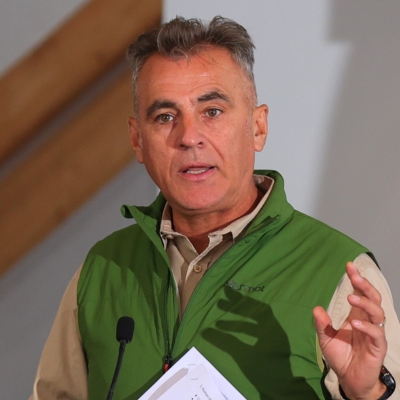
President: Florin Halastauan
I started as a mountain rescuer in the Romanian Retezat Mountains. From 2002, I continued as a volunteer ranger in the new administration of Retezat National Park, where I soon became one of Romania’s first employed park rangers. Since then, I have also been actively involved in founding the Romanian Ranger Association.
I attended my first World Ranger Congress in Scotland 2006 and was then later elected twice as European Representative on the International Ranger Federation (IRF) board before becoming IRF Vice-President from 2016 to 2019.
In 2007, the Romanian Ranger Association organised the first European Ranger Congress. Together with rangers from Germany, Czechia and other countries, we were also involved in the founding of the European Ranger Federation in 2017, for which I have been active in various international trainings to this day.
As ERF President, I look forward to activating and integrating Europe’s national ranger associations in order to develop targeted support for the needs of rangers in their respective countries.
©Conservation Carpathia
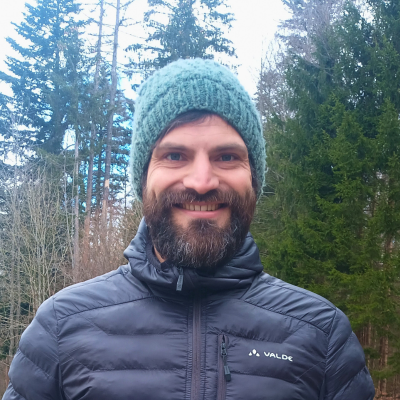
Vice President and IRF Europe Representative: Lars Scharfe
Protecting nature is the most important task of our time! Growing up in Berlin, nature always pulled me out of the big city and my affection for it was getting bigger and bigger.
Besides my Geology career, that opened up a deep understanding about the natural processes on earth for me, I gained experience in managing a nature protection area during my civilian service and am an expert in trail work in protected areas having been involved in the Iceland Conservation Volunteer Programm since 2014.
In 2022 I finally managed to jump into the Ranger World by getting a position in the Bavarian Forest National Park and thus the connection to the ERF. Additionally, I completed the Regio-Ranger Ranger certificate at the German Nature Online Academy in Spring 2023.
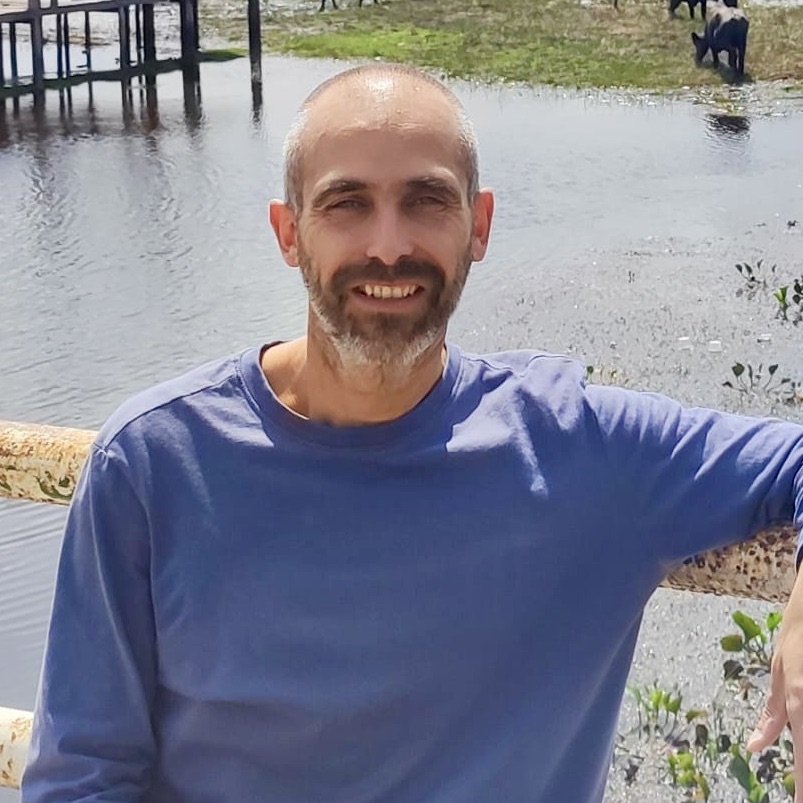
Financial Officer: José Maria Jiménez Cañete
I was born in 1983 and am a biologist.
I have been working as a ranger in Andalusia (Spain) since 2019. Initially, I worked in forest areas, but now my position is more focused on environmental protection and the protection of local wildlife.
Before joining ERF, I worked with the organisation as a teacher for several courses. Now I am happy to be part of the organisation and to work with it from inside.
Secretary: Maria Gurscaia
I am an inspector-volunteer for environmental protection (ranger) in the Republic of Moldova, constantly involved in the sustainable development of its protected areas. My anthropological background is an advantage in my work as a ranger for better interpreting the natural and cultural heritage and working with local communities and tourists.
Last year we established our National Moldovan Ranger Association for inspectors-volunteers across the country. After a first meeting with ERF at the beginning of 2024, we got a strong impulse to develop a better working ranger system in Moldova – so we became full members of IRF and ERF with me as contact person. At the 10th World Ranger Congress, we signed our first Twinning agreement with the Romanian Ranger Association.
I strongly believe in ERF’s principles and vision and it’s an honour to support it for our common better future, a healthier environment and a flourishing nature.

Training Officer: Borja Díaz
I became a Ranger in 2000. In the two recent decades, I have been working as a ranger for the Basque province of Biscay covering the fields of forestry, hunting and fishing and management of protected areas.
I am a certified forest fire investigator and legal expert in crimes against biodiversity. In the last decade, I have been very involved in the promotion of training courses for rangers, contributing to the development of a net of Basque rangers from different organizations.
In 2018, I was one of the co-founders of Aminta, a ranger association that aims to help the families of Spanish rangers who have fallen in the line of duty and to preserve their memory.
In 2019, I participated in the World Ranger Congress that took place in Nepal and realized the importance of strengthening the ties between rangers on a global scale, facilitating the exchange of mutual support, knowledge, and solidarity.
Lately, I have been involved in various Spanish interregional and European training projects.
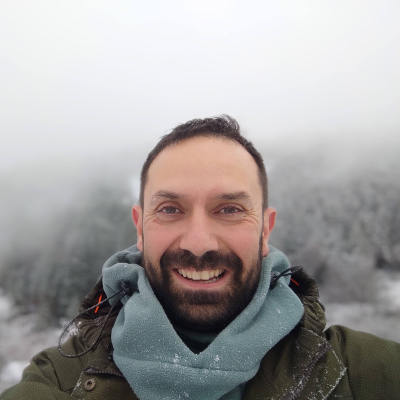
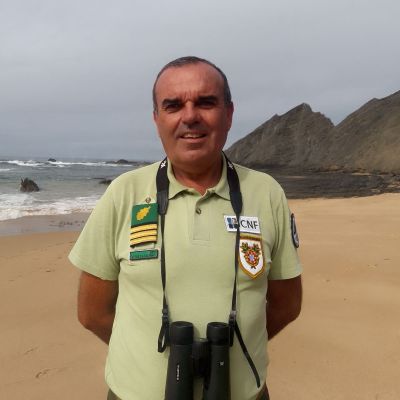
Project Officer: Vitor Casalinho
I began my environmental career with the Rangers Course in 1991, joining the Institute for Nature Conservation and Forests (ICNF)-Portugal in 1992.
I worked at the Tagus Estuary Nature Reserve, one of the most important wetlands in Europe, focusing on environmental enforcement and waterbird monitoring. I also participated in conservation events, including those linked to the Ramsar Convention on wetlands. In 2002, I was transferred to the Southwest Alentejo and Vicentine Coast Natural Park, where I continue to work.
My role includes enforcing regulations on recreational fishing, poaching, and illegal camping, forest fire surveillance as well as species monitoring, providing deep insight into coastal conservation and local environmental challenges.
As a member of the Portuguese Association of Park Rangers, I have participated in the organisation of several national and international congresses.
I am confident that my background, dedication and global perspective align well with the objectives of ERF.
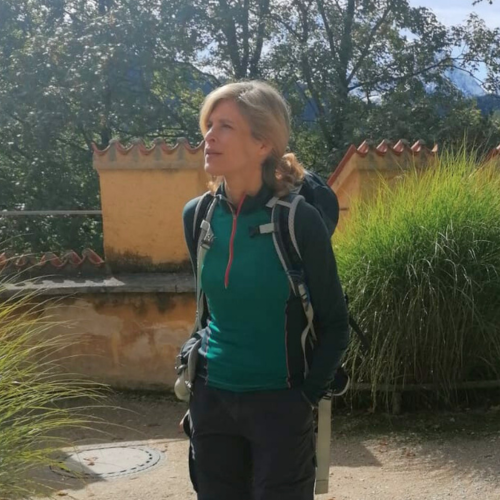
EEC Assistant: Manuela Jenicek
My interest in protecting nature and its inhabitants began back in 1998. As a volunteer, I protected sea turtles and their nests in Greece.
Today, as a certified ranger, my special interest lies in educating children and adults on tours through Austria’s beautiful natural landscapes.
In 2019, at the International Ranger Congress in Nepal, I was one of the founding members of the Austrian Ranger Association. This association participates in national and international ranger meetings and strives to promote networking and exchange.
Now, I am happy to support the ERF as EEC Assistant.
In addition to volunteers, ERF works with payed professionals as is the case for the following position:
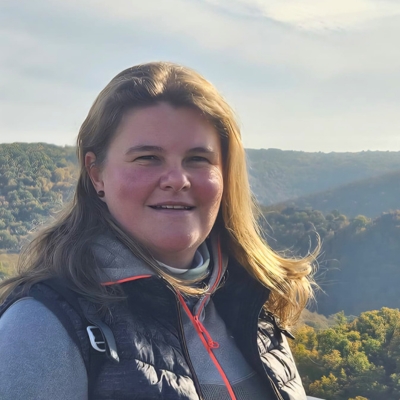
Press Office: Wiebke Bomas
I am a journalist focusing on conservation and the outdoors. I came into contact with the ranger profession through several months of volunteering, including in the Bavarian Forest National Park – and have since been convinced that it is one of the most important jobs of our time.
Influenced by my economics studies, which were always about the optimum for all players in our society, I think that rangers are working very hands on on exactly that. Because without the preservation of biodiversity and ecological habitats, the well-being of humans is not far off. And vice versa, conservation only works with humans.
I am therefore very happy to work with the ERF to ensure that rangers get all the support and recognition they deserve in their work as mediators between people and nature. As a journalist, I do this above all by giving them a face through interviews, reports and other formats, but also by creating networking opportunities – for a strong voice in the cause of nature and bundled knowledge for its protection.
Election process for the ERF’s Elected Executive Committee (EEC)
Period for the nomination of candidates:
Candidates must submit their nomination to the Election Committee within the 60-day to 30-day period prior to election day.
Candidate:
A person who is eligible to stand for office in the European Ranger Federation (ERF) and fulfils the following criteria: The candidate must be a current or former Ranger, a member of an association in good standing and listed on the final electoral roll.
Voting process:
Voting takes place exclusively via a secure electronic system that guarantees the integrity and confidentiality of the process.
Voting system:
A secure and verified electronic voting platform is set up to which only full members entered in the final register have access.
Access to the system:
Each association receives a unique link and secure access data for the voting system. The access data will be sent to the official e-mail address registered in the census.
Electronic ballot paper:
The ballot paper will contain the names of the candidates and the system will provide clear instructions on how to vote.
Voting period:
Full members will have a 7-day voting period during which they can access and cast their vote at any time.
Announcement of election results:
The Election Committee will announce the results as soon as possible, within 3 days of the end of the voting period.