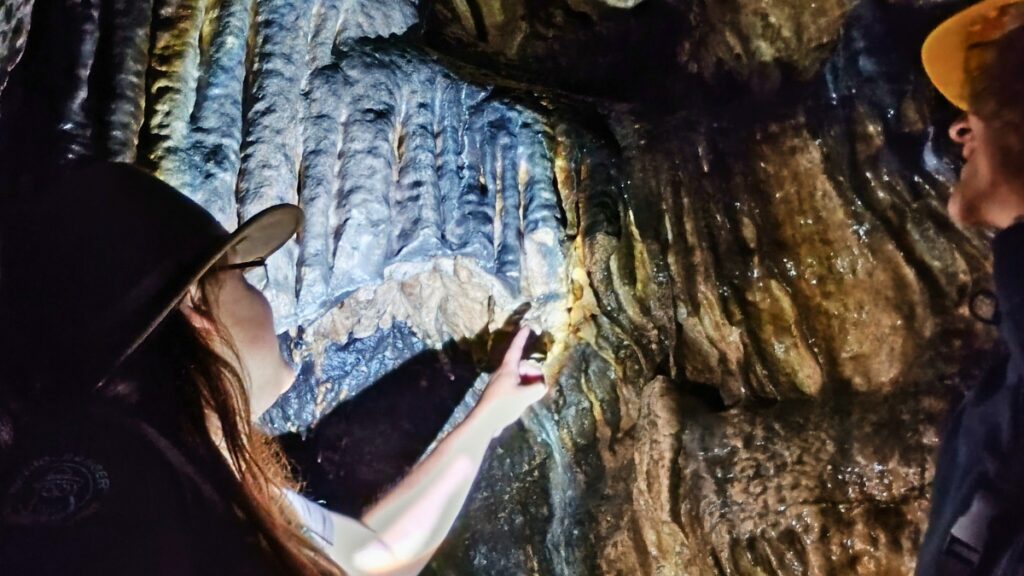
As a ranger specialising in caves as unique habitats for countless largely unknown species, Sabrina Sedlacek practises what the IUCN, among others, refers to as transformative conservation: by raising awareness of the value and vulnerability of this natural habitat, the freelance ranger in Upper Palatinate, Germany, connects society with nature.
We are delighted that, against the backdrop of this year’s World Ranger Day theme on 31 July, ‘Rangers, Powering Transformative Conservation’, she is giving us a real-life example of this with an insight into her work.
Sabrina, as a ranger, you have specialised in raising people’s awareness of how valuable and, at the same time, endangered caves as habitats are. What makes them so special?
To answer this, one must first understand what special ecosystem caves represent. Caves encompass a variety of scientific disciplines. These include geology, hydrology, biology, as well as archaeology, paleontology, and anthropology. Each individual discipline requires specific and unique protection. When it comes to species that inhabit the caves, one might first think of the well-known bats. Of course, caves are an important refuge here, especially during the winter months when hibernation takes place in caves.
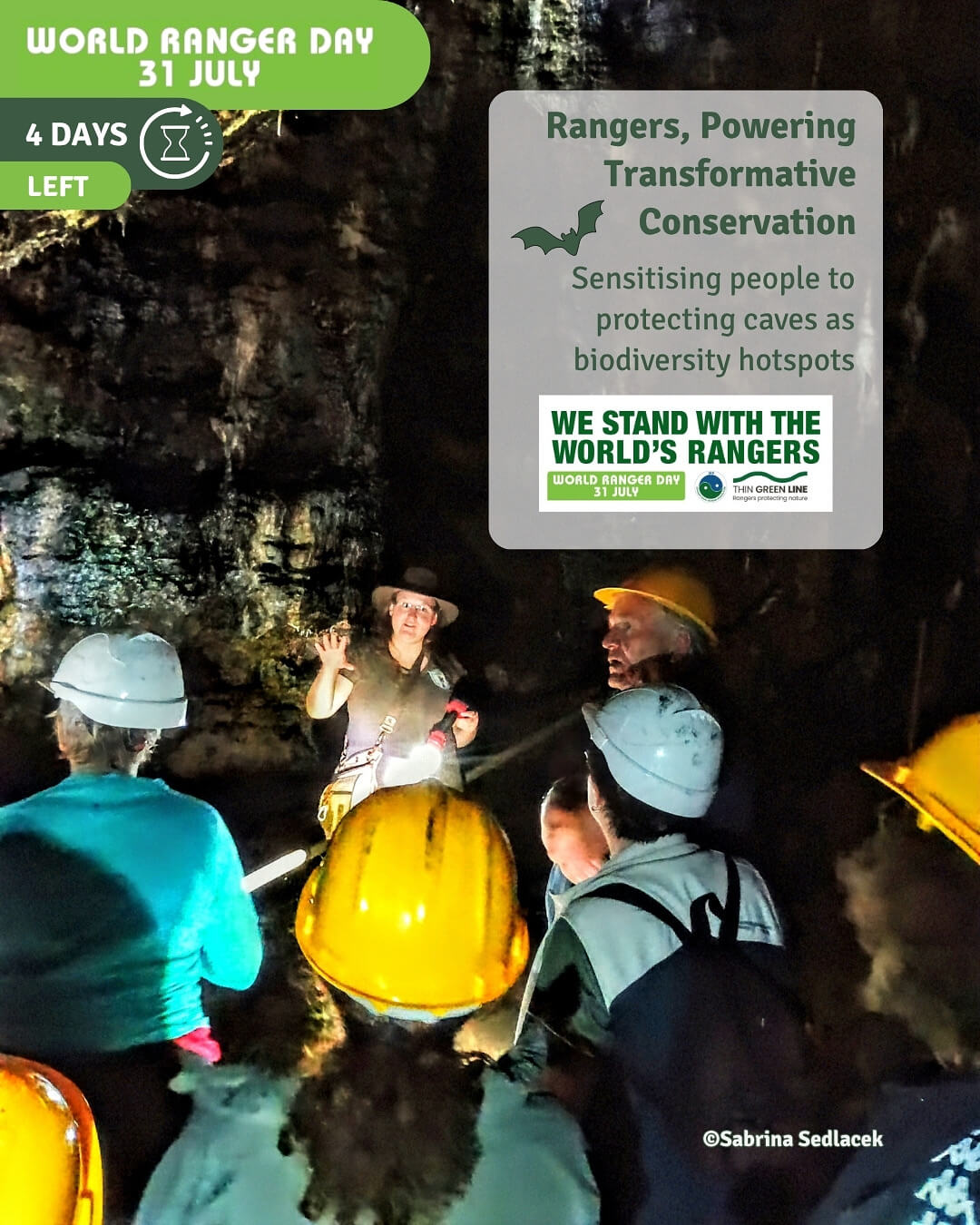
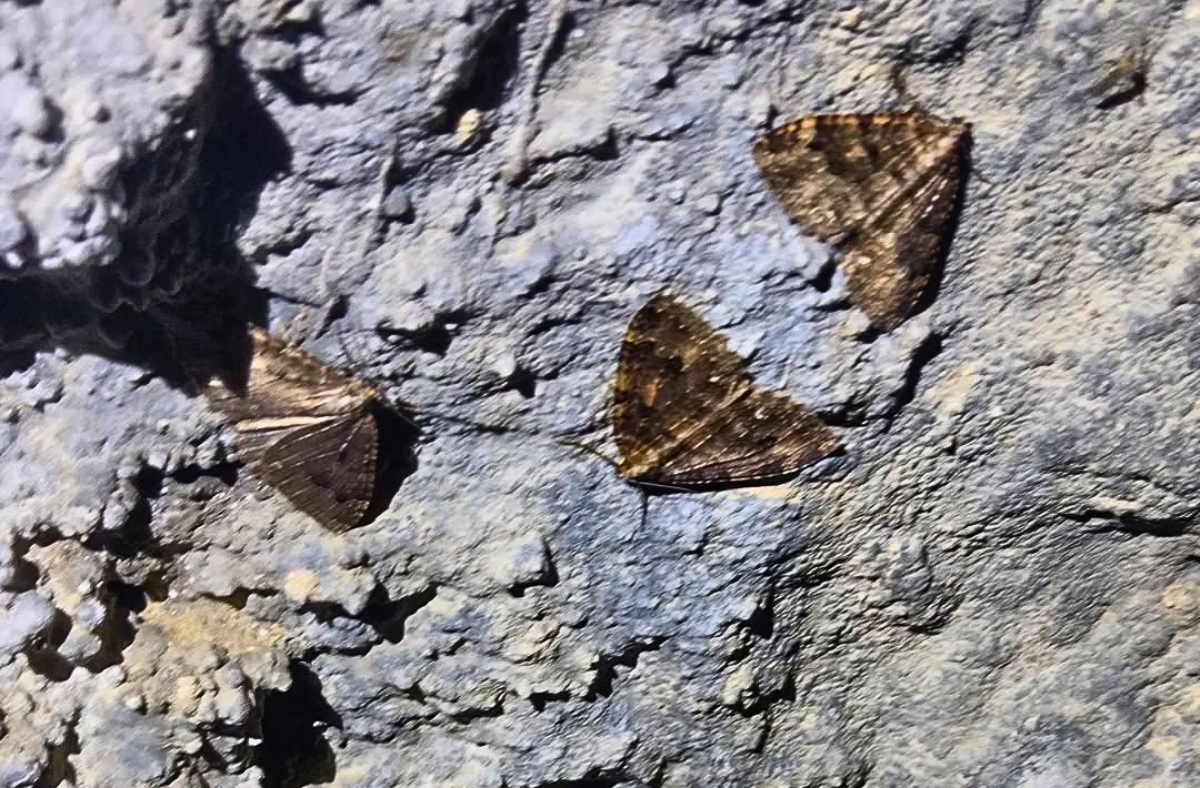
In the cave in the photo, the presence of the große Hufeisennase Rhinolophus ferrumequinum is particularly noteworthy. This species is listed as “endangered” in the Red List in Germany and Austria. However, depending on climatic conditions, a cave can host several hundred animal species. There are those who visit the caves only periodically, up to the species that inhabit the caves throughout the year and are largely unknown to the general public. One example is the cave moth. But there are countless more such species.
How do you see your role as a ranger with regard to these species?
My role as a ranger is raising awareness. Particularly with the animal species that permanently live in caves and can be found in this dark, predominantly humid, and cold climate, which offers only a limited food supply. One can observe the special adaptations of the animals well. Even the smallest changes, especially caused by humans, can cause great damage here.
What are the greatest dangers in this context?
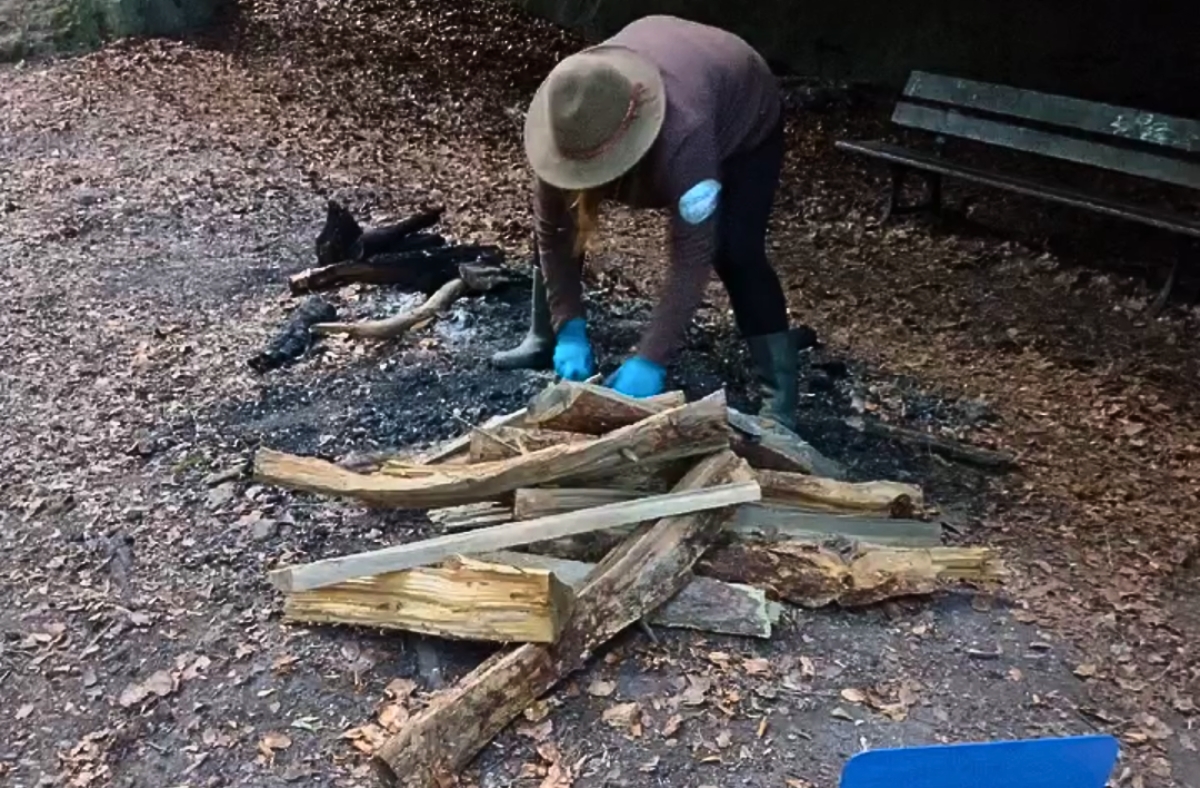
Time and again, I experience severe littering in the caves. Unfortunately, fires and destruction are also not uncommon. This is particularly regrettable for the slowly growing stalactites, as they can also serve as silent witnesses of past climate conditions. During my area inspections, I visit as many caves as possible to educate and prevent fires, all the way to intensive cooperation with various fire departments and cave owners, as well as the nature conservation authority.
Cave systems often serve as natural filters and reservoirs for groundwater. When a cave is damaged or polluted, often the entire watershed suffers.
Cave protection also means water protection. The water-bearing caves are sensitive to pollutants that seep in from the surface – for example, through agriculture, industry, or wastewater. Cave systems often serve as natural filters and reservoirs for groundwater. When a cave is damaged or polluted, often the entire watershed suffers. Here, I have discussions with farmers whenever possible.
editorial work for this
content is supported by