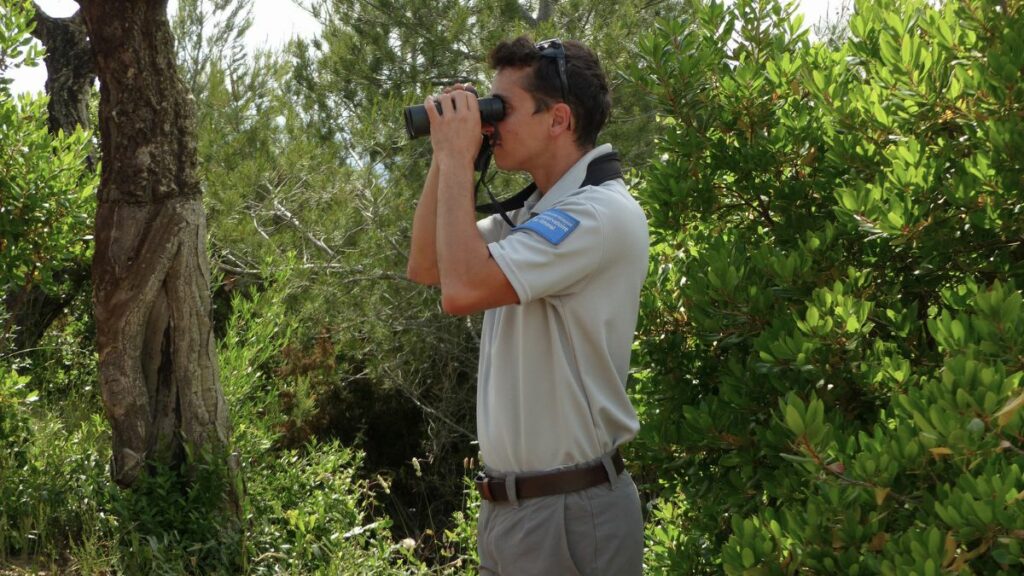
Working where others spend their holidays: This is certainly true for a great many rangers. In the case of Tristan Calistri, ranger in the protected areas of Colle Noire and the Giens peninsula, two mountainous regions on the French Côte d’Azur, the many tourists throughout the summer season require constant sensitisation to the high risk of fire. All the more so with climate change, which is currently making itself felt with water temperatures almost 10 degrees above average.
At the same time, Tristan and his fellow rangers engage with locals to show them the unique biodiversity of their home region and work with regional associations to reintegrate ex-convicts or drug addicts by supporting their ranger work in maintaining trails. We spoke to him about the nature he protects in this highly frequented region, his biggest challenges and how people support the rangers’ work.
Tristan, you work in a region that is currently in the news in Europe due to extremely high water temperatures – how are you experiencing this as a ranger?
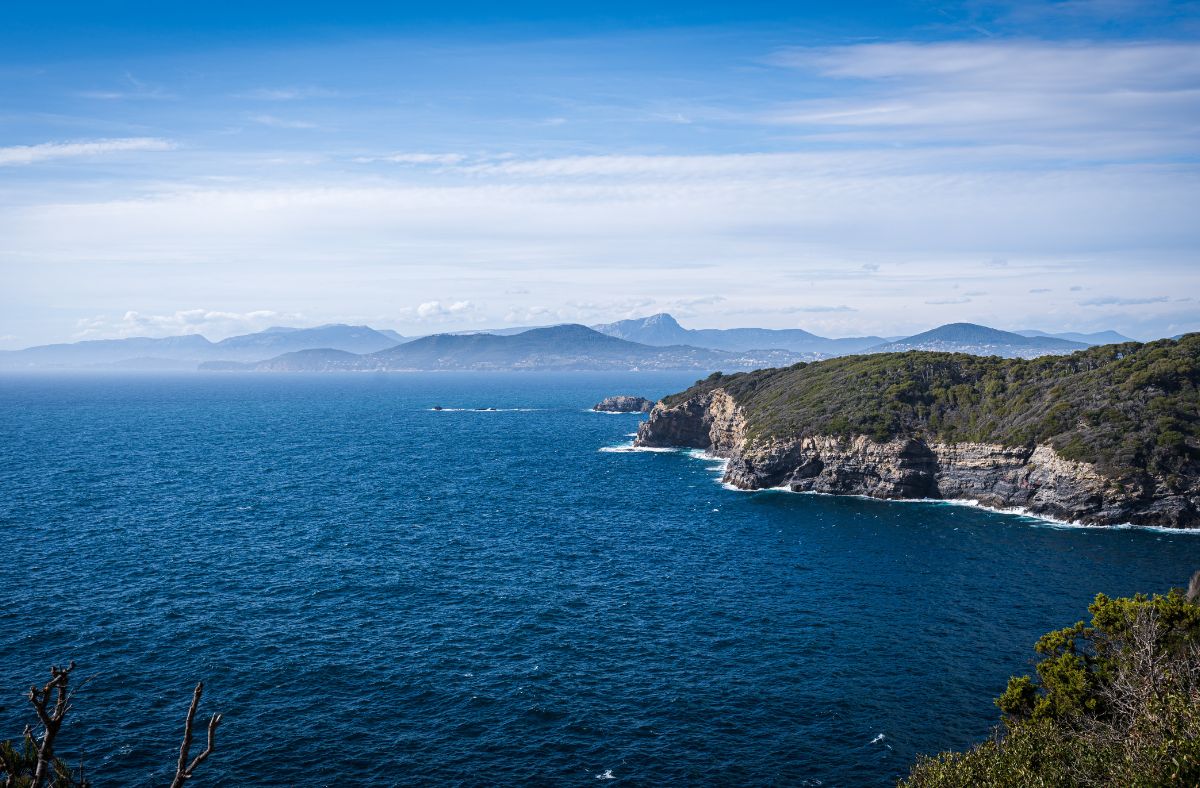
Yes, we are experiencing it a lot, the water went from 21°C normally to 30°C during this season! Sometimes you can see the Mediterranean Posidonia, an important part of the underwater ecosystem, washed out on the beaches because of the heat and also some ‘mushrooms’ on its leaves. Unfortunately there is nothing we can do at the moment to make it less bad!
But as a ranger, you do a lot for habitat and species diversity as natural climate protection: In a coastal area with its many attractions for tourism and leisure, what special species do you protect?
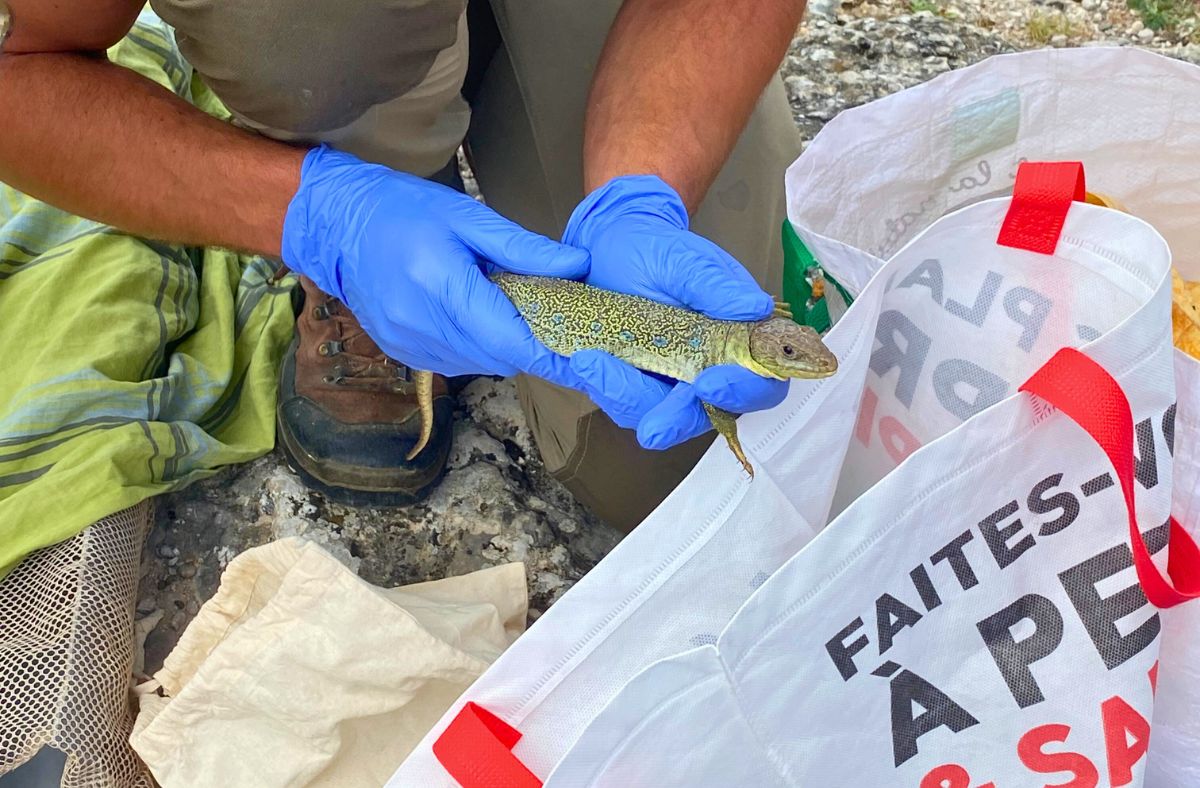
One of the species we are particularly concerned about is the ocellated lizard, whose population is declining at an alarming rate in our region. We have six monitoring areas, each about one hectare in size, where we follow scientific protocol and record sightings or tracks such as faeces, holes or other evidence of the species’ presence.
‘Last year, we found none. This year we have several records of ocellated lizards, whose population is declining rapidly in our region. We even see that they are reproducing.’
We have noticed that the local population has increased: Last year, apart from a few unverifiable sightings by visitors, we found none. This year we have several records and even see that they are reproducing. And on Colle Noire there is the hybrid plant Armeria. It only grows on this mountain, so we have put up fences in certain places to keep people on the paths and will start mapping it. It has a vital function as there is an old copper mine in the centre of the protected area. When the mine was established, many minerals were extracted. This plant drains the bad minerals and cleans the soil through its root system.
And what about the habitats you are protecting?
We try to keep semi-open areas open, as the lizard depends on these areas, as do many other species. Here in south-east France, the forest is growing rapidly and closing the areas. There has been a lot of farmland that has been abandoned. To manage agriculture in these hilly areas, our ancestors built terraces with stone walls, which became home to many specialised species. This type of cultivation created ecosystems that are now endangered, as fast-growing pine trees in particular completely cover the area. The already high risk of forest fires also increases with afforestation. But we are managing to keep some of these areas sparsely vegetated. We also have to deal with erosion. That’s why we select the vegetation and give more opportunities to native fruit trees, for example, which are interesting for birds. And we need to protect the native vegetation, which grows very slowly.
How do you deal with the many people?
We do educational work around the mine to show how fires start, what the risks are and how they can be prevented. This morning I took a school class to the Giens peninsula to show them the consequences of erosion. The biggest risk is the loss of soil: if we only have rocks and pine trees, biodiversity is very low. But our biggest task remains fighting fires, where we have no patience with people. We have been telling people for 20 or 30 years that campfires are not allowed because of the high fire risk. Now we have to penalise people to make sure it doesn’t happen again.
‘Our biggest task remains fighting fires, where we have no patience with people. We have been telling people for 20 or 30 years that campfires are not allowed. Now we have to penalise.’
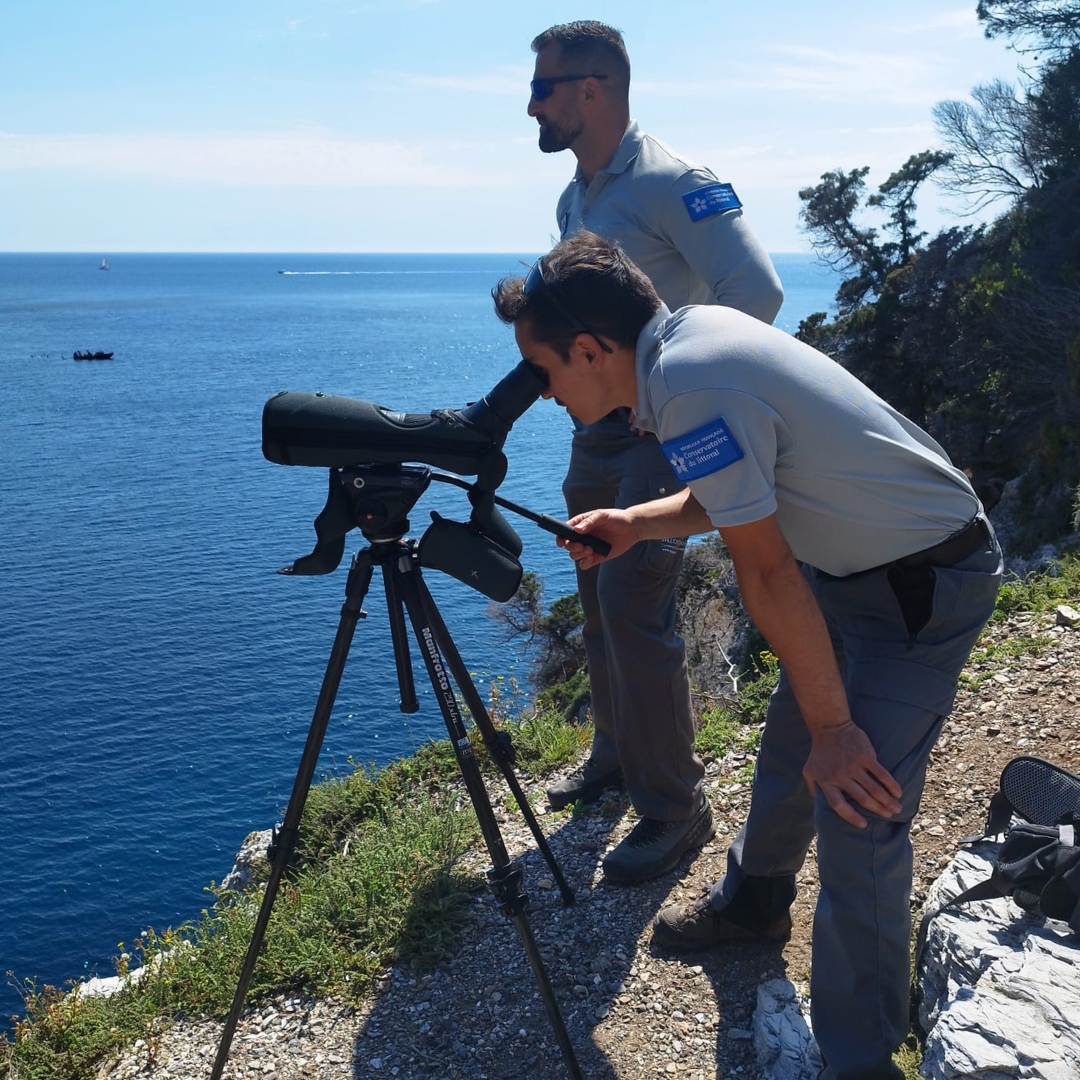
Another problem is preventing the extraction of minerals, plants and animals. We have a rich variety of minerals. Sometimes we hear that people are extracting minerals from the rocks in the mountains. We then try to track them down and stop them. Some people also fish for sea urchins during the breeding season, which is forbidden during this time. We are not out at sea with boats, but we see people when they come back from the sea and then carry out checks. In the Porquerolles National Park there is also a net for every type of fish. So we also check that they are not too tight and risk too much bycatch.
How do you experience people’s support for nature conservation?
We have a great awareness among mountain bikers. Most of the time they can’t see the signs very well as they are quite small. So if they pass by at some speed, they can easily be overlooked. But when we inform them that they are on a route that is closed for conservation reasons, they are usually very understanding and willing to support local conservation efforts , promising not to use these routes again. The same applies to dog owners, especially during the bird nesting season when dogs must be kept on a lead.
‘By working with former prisoners or addicts to reintegrate them, everyone wins: We as rangers experience help and enjoy seeing how good it does those people to work in nature.’
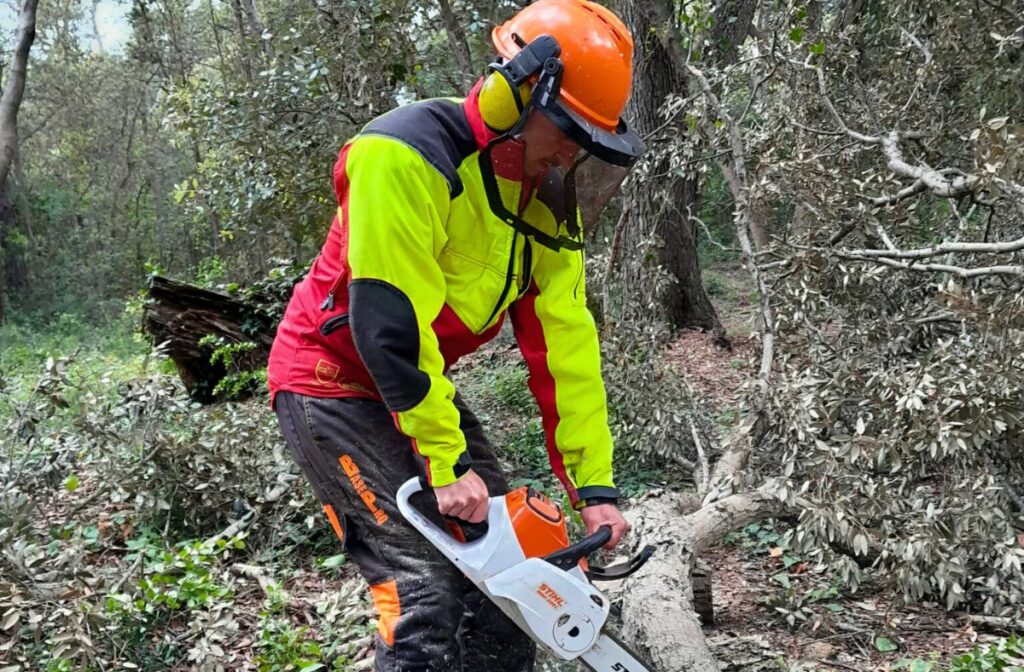
One of the most important links with local people is the maintenance of the paths. We work with several local organisations that try to reintegrate people back into society – for example prisoners or alcoholics. We involve them in the maintenance of paths and show them, for example, how to cut down trees that hang over the paths and pose a potential danger to people. Everyone wins from their integration, because we as rangers experience help and enjoy seeing how good it is for these people to work in nature.
editorial work for this
content is supported by